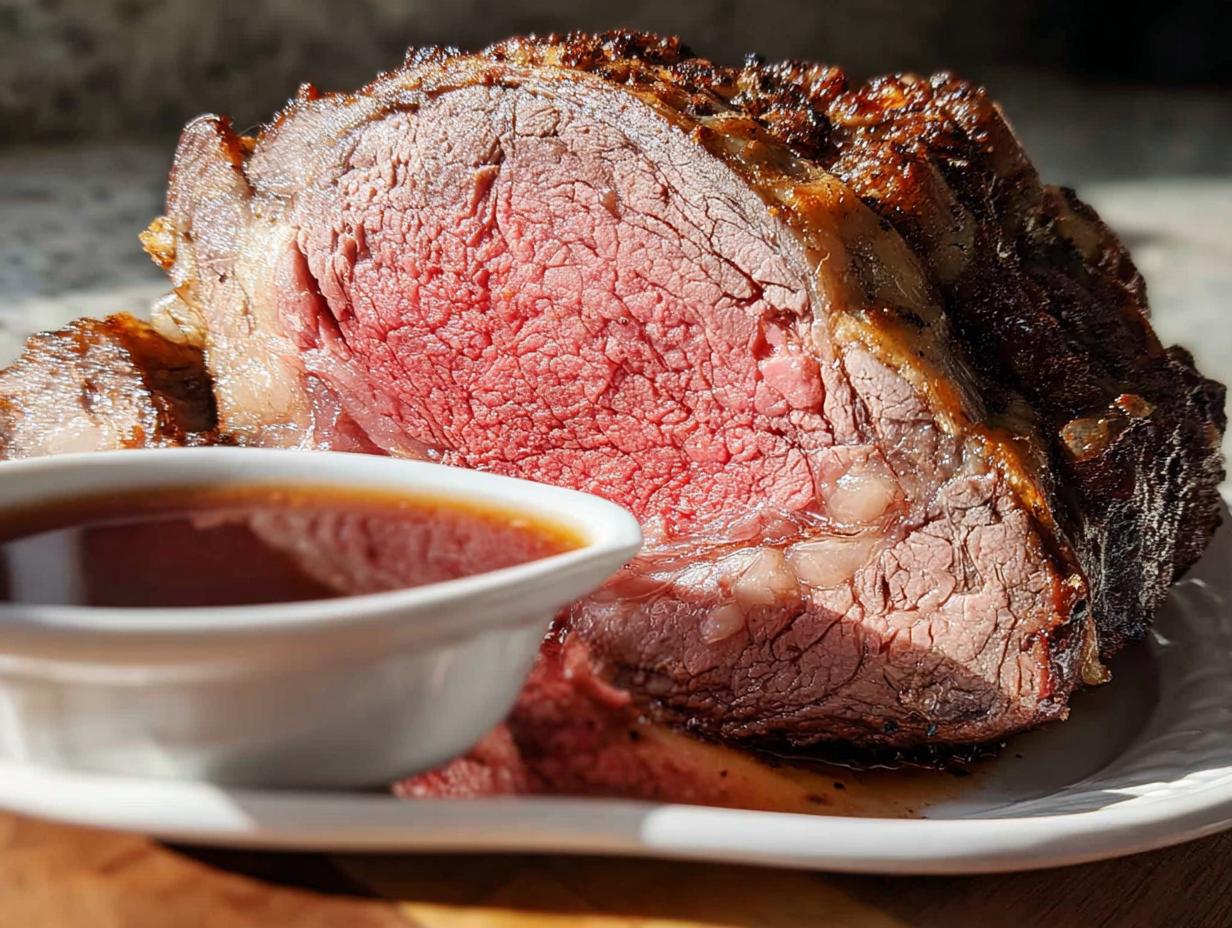
Forget those stiff, dry roasts you sometimes see at holiday dinners! Getting that melt-in-your-mouth, restaurant-quality prime rib right in your own kitchen seems intimidating, I know. But trust me, making a showstopper roast that actually drips with flavor is totally doable. That’s why I’m so excited to share my absolute favorite way to tackle this centerpiece meal: my recipe for Prime Rib Au Jus – The Wooden Skillet.
I’ll never forget the first time I made this for my family. It was a chilly winter evening, and we had gathered for a holiday dinner. After weeks of planning, I carefully selected the perfect cut of meat and spent the afternoon crafting my au jus. When I pulled that beautiful roast from the oven and saw the smiles on my family’s faces, I knew I had created something special. The combination of tender, flavorful prime rib and rich, savory sauce turned our meal into a moment filled with laughter and love. To this day, that recipe has become a cherished part of our family traditions, perfect for celebrations or just a cozy dinner together. You’re going to love how simple the process is once you know the tricks! If you’re looking for more inspiration on creating amazing dinners, check out my tips on what makes perfect dinner ideas.
Why Prime Rib Au Jus – The Wooden Skillet is Your Go-To Recipe
Listen, you deserve that amazing steakhouse experience at home, and this recipe is your ticket! The goal here isn’t just cooking meat; it’s about creating truly succulent flavor that makes everyone ask for seconds. When you use the Prime Rib Au Jus – The Wooden Skillet method, you get serious flavor payoff without all the fuss.
- It delivers ridiculously tender, flavorful meat every single time.
- The simple seasoning lets the quality of the prime rib shine through.
- It turns minimal effort into a show-stopping centerpiece meal.
We nail the texture because we aren’t guessing! You can find more easy-to-master meals like this over at dinner ideas recipe everyone asks for.
Achieving Perfect Medium-Rare Results
The biggest fear I hear is messing up the doneness, right? That’s why we rely on temperature over time. Following the instructions carefully guarantees you hit that sweet spot—that beautiful edge-to-edge medium-rare—without worrying about tough spots. It’s the secret to that perfect mouthfeel!
Essential Ingredients for Prime Rib Au Jus – The Wooden Skillet
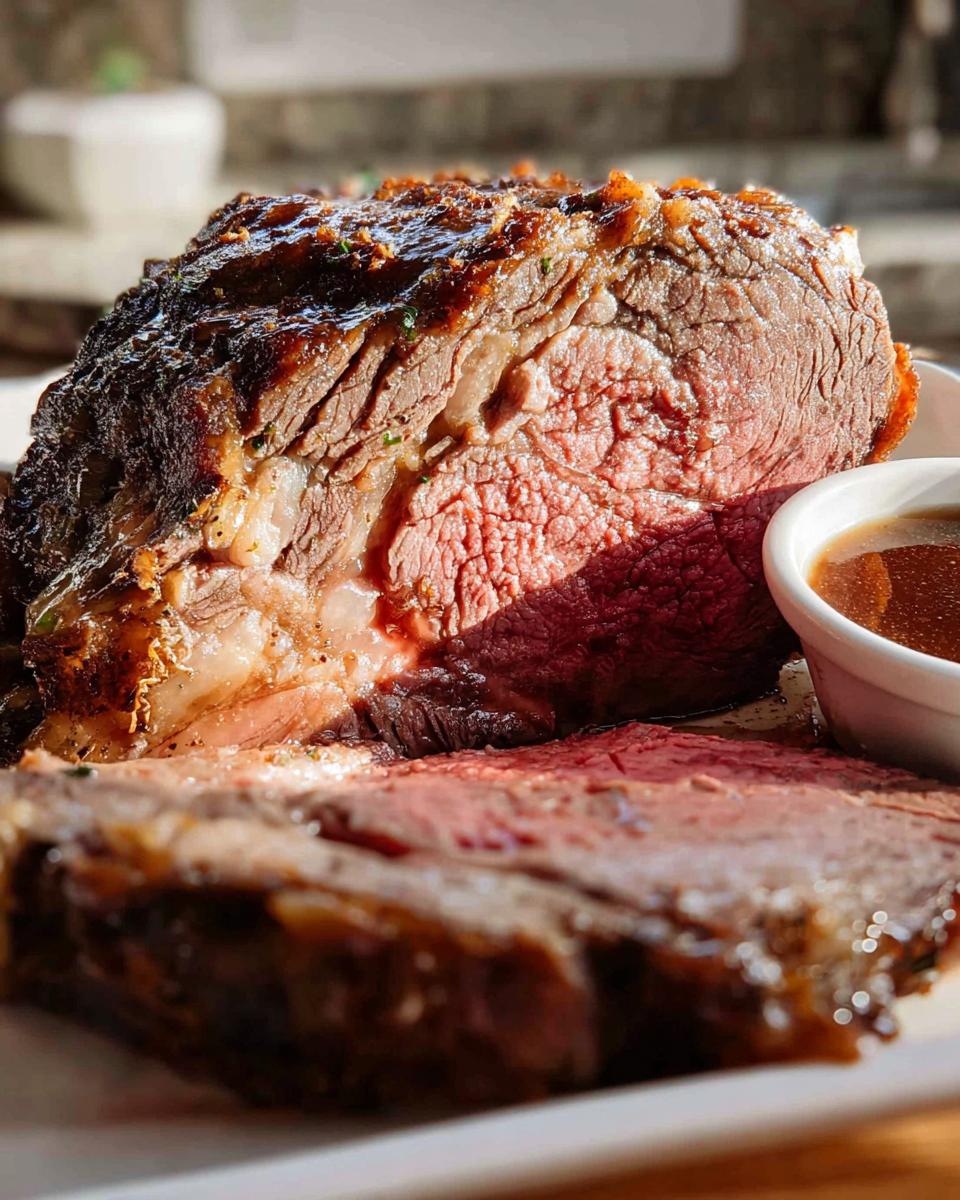
When you’re making something this special, the ingredients really matter, and luckily, this recipe keeps things wonderfully simple! We want the beef to be the absolute star here. You’ll need a beautiful standing rib roast—make sure you grab an 8lb cut if you’re serving about 8 people, like I usually do. Don’t skimp here; quality matters!
For the seasoning, we’re keeping it classic: plenty of kosher salt and ground black pepper. We rely on those larger salt crystals. If you use regular table salt, it clumps up and gets way too salty in spots. Trust me, stick to the kosher salt for that even crust we aim for. You can find my absolute favorite crusting method over at this external guide on salting and crusting, which I always reference.
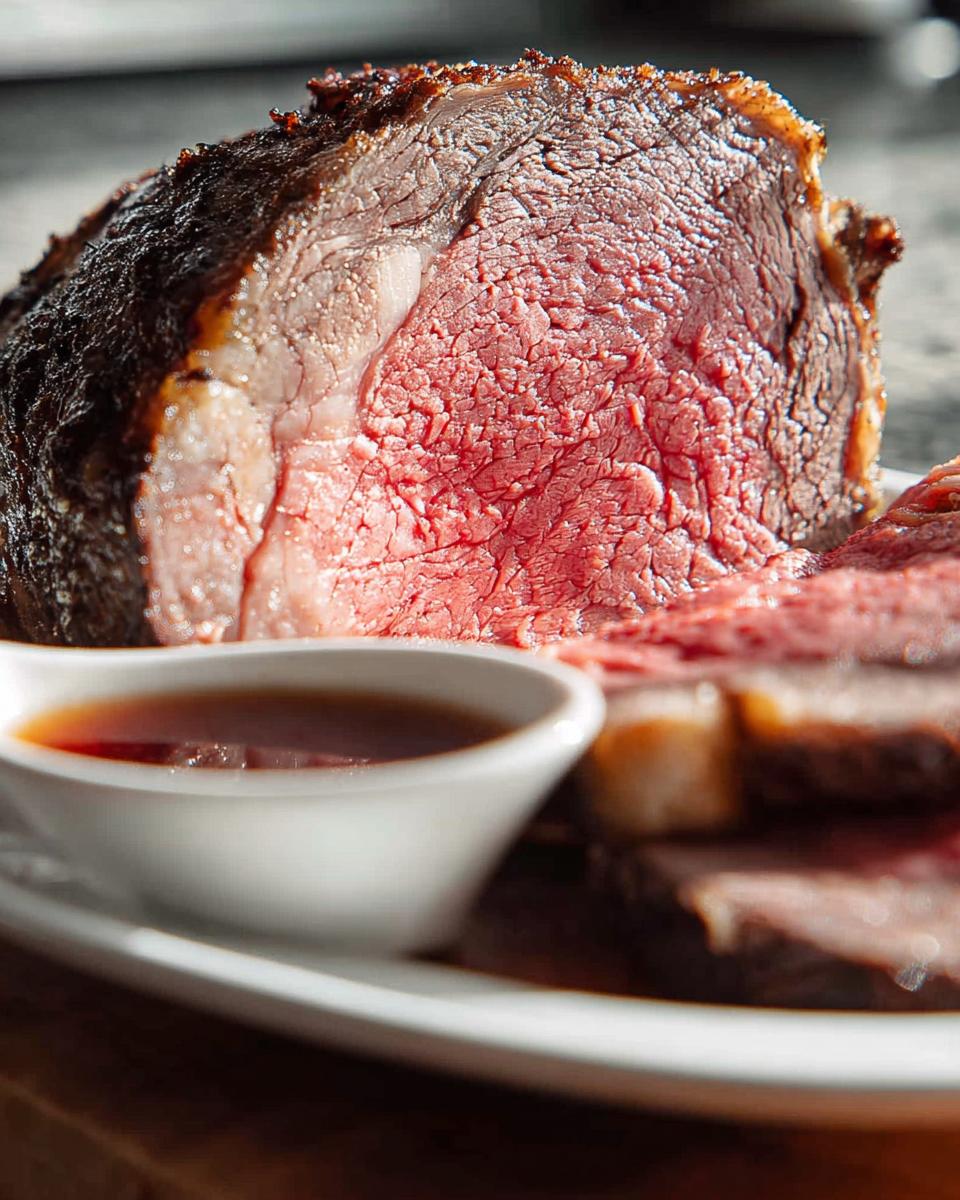
If you happen to grab a boneless roast instead of a bone-in, just know it cooks a tiny bit faster! For more on choosing stellar components for celebratory meals, check out my guide to ultimate dinner ideas guide ingredients temps tips.
Ingredient Notes and Substitutions
I mentioned the salt already, but it bears repeating: **Kosher salt only**, please! It gives you control, which is everything when dealing with a big piece of meat like this prime rib. If you’re looking to make a slightly smaller meal, cutting the recipe down works, but remember that boneless roasts tend to cook faster than bone-in ones, so keep a close eye on your thermometer!
Step-by-Step Preparation for Prime Rib Au Jus – The Wooden Skillet
Okay, this is where the magic happens! Getting the texture right for our Prime Rib Au Jus – The Wooden Skillet depends entirely on following these steps precisely. It’s not hard, but timing is everything, so try to have everything else ready before you start prepping the meat.
Seasoning and Bringing Meat to Temperature
First thing’s first: grab those paper towels and pat that beautiful rib roast completely dry. Seriously, dry! Any surface moisture steams instead of searing, and we want a gorgeous crust here. Mix up your salt and pepper—use lots of kosher salt—and rub that mixture all over the entire roast. You won’t use all of it, but make sure it looks well-seasoned.
Now, this is crucial for even cooking: you have to let it sit out on the counter for at least two hours before it hits the heat. We need that meat to come up to room temperature so the center doesn’t end up raw while the edges are overdone. Don’t rush this step; it sets the stage for the whole show!
The Critical Roasting Method
Once that waiting time is up, crank that oven up to a blazing 500 degrees F! Set the roast fat-side up right in the roaster—no rack needed, honestly. We sear hard for the first 20 minutes. This blast of high heat sets that beautiful, flavor-packed crust we worked so hard for.
Right after those initial 20 minutes, drop the temperature way down to 325 degrees F. Keep that oven door shut! You hear me? Don’t peek! Opening the door drops the temperature too much and messes with the cooking equilibrium. If you have a fancy thermometer, use it, but otherwise, just trust the time estimate (about 15 minutes per pound for medium-rare).
Resting and Slicing for Juiciness
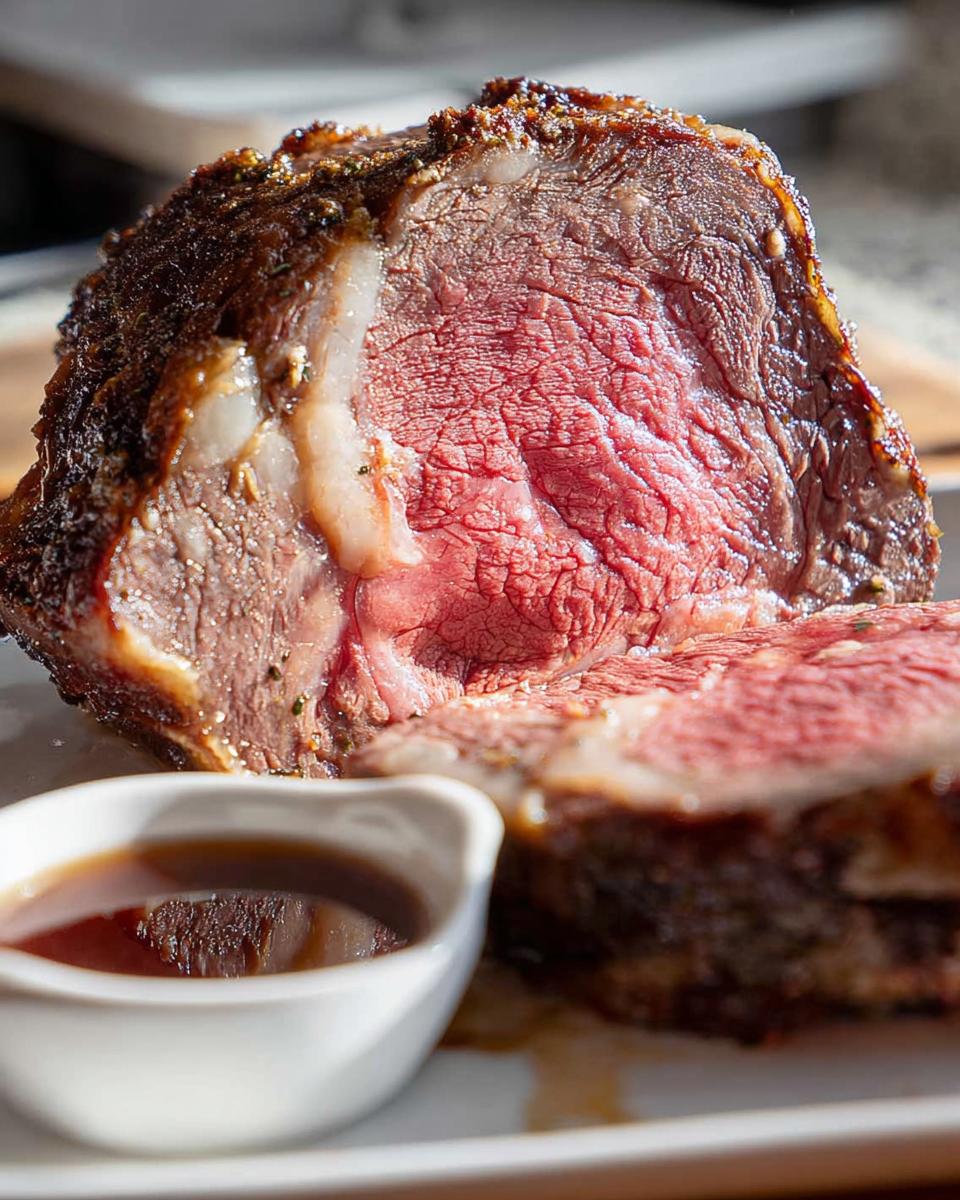
When your internal temp hits that perfect mark (I aim for 130 degrees F for medium-rare), pull that gorgeous roast out! Immediately cover it TIGHTLY with foil or the lid and let it rest. I insist on 20 to 30 minutes. This rest is non-negotiable! If you slice too soon, all those delicious juices run right out onto the cutting board.
During this resting period, the internal temperature actually keeps climbing a little bit, which is called carryover cooking. Once it’s rested, slice it against the grain into nice thick steaks. Then, you’re ready to drizzle that fresh au jus over every single bite! For more foolproof advice on timing and temperature in the kitchen, check out my tips for how to make dinner ideas foolproof.
Tips for Perfect Prime Rib Au Jus – The Wooden Skillet
Getting that restaurant-quality result requires being a little bit of a food detective, especially when it comes to knowing when your roast is *actually* done. For the best Prime Rib Au Jus – The Wooden Skillet, you absolutely must rely on a good meat thermometer. Don’t rely just on the time chart!
We are shooting for medium-rare, which means pulling it when the internal temperature hits somewhere between 130 and 135 degrees F. Remember, it keeps cooking after you take it out, so pulling it slightly early is better than overcooking it! Another quick tip: I skip the roasting rack completely. Placing the roast directly on the bottom of the roaster helps the juices concentrate underneath the meat wonderfully, which is key for making a spectacular au jus later on. For more pointers on keeping your meats incredibly juicy and crispy across the board, take a look at best dinner ideas 2025 crispy juicy.
Serving Suggestions for Your Roast
We’ve done the hard work—the roast is rested, sliced, and glistening! Now we need the perfect supporting cast for this magnificent centerpiece. The rich, savory au jus we created is fantastic as is, but you know me, I always love a little extra something on the side to balance all that richness. You absolutely must serve this with creamy horseradish sauce; its sharp bite cuts through the fat of the prime rib so beautifully. Seriously, don’t skip that creamy condiment!
Beyond horseradish, think about earthy sides. Roasted root vegetables or a creamy potato gratin are always winners. And if you want to feel really fancy, a simple side salad with a sharp vinaigrette cleanses the palate perfectly between bites of meaty goodness. For more ideas on how to build an amazing, restaurant-style meal at home, check out my thoughts on restaurant style dinner ideas at home soup.
Making the Best Gravy For Prime Rib
Now, while the simple au jus is liquid gold—just the flavorful drippings from the pan loosened up a bit—sometimes you want something thicker, you know? If you’re looking for a traditional, clingy Gravy For Prime Rib, it’s easy to step it up from the au jus. The trick is using a bit of flour or cornstarch as a thickener.
After you’ve poured off your au jus, put the roaster back on the stove over medium heat. Whisk in a tablespoon of flour right into those lovely brown bits leftover in the pan, cook it for a minute, and then slowly whisk in some beef broth or stock until it’s reached your desired thickness. That gives you a full-bodied Prime Rib Gravy Recipe every single time. It’s still using the inherent flavor of the roast, just built up a bit more!
Storing and Reheating Leftover Prime Rib Au Jus Recipe Easy
Oh, the wonderful problem of having leftovers! Even an amazing roast like the Prime Rib Au Jus – The Wooden Skillet sometimes yields more than we can handle in one sitting. Don’t just throw the rest in a plastic bag, though; we need to treat these leftovers right so they taste almost as good the next day!
The key is separation. Keep your beautifully sliced prime rib stored airtight in the fridge. And the au jus? That wants its own container. Au jus freezes wonderfully, by the way, but for short-term storage, keep it separate so the cold meat doesn’t soak it up.
When it comes time to reheat, never microwave the slices—it turns them grey and tough! Instead, warm the slices gently in a pan with just a splash of water or extra au jus over low heat until they are just warmed through. You can also warm the remaining Prime Rib Au Jus Recipe Easy separately and drizzle it over top. For great ideas on how to make your cooking stretch all week long, you should check out my tips on dinner ideas for busy weeknights meal prep friendly.
Frequently Asked Questions About Prime Rib And Au Jus Recipe
I know roasting a huge piece of meat brings up all sorts of questions in your mind, especially when you’re trying to get everything perfect for a special meal. Dealing with the roast and making sure you have the best Sauce For Prime Rib ready is key! Here are some things I get asked all the time when people try my Prime Rib Au Jus – The Wooden Skillet method.
What internal temperature is considered medium-rare?
For that absolutely perfect, tender medium-rare that melts in your mouth, you want to pull the roast when your thermometer reads between 130 and 135 degrees F. That internal temperature will rise a few more degrees while it rests, which is exactly what we want. Anything higher starts getting into medium territory, which is fine, but medium-rare is where the magic lives!
Can I make the Prime Rib Au Jus ahead of time?
Oh yes, you absolutely can! In fact, I often recommend making your Prime Rib Au Jus Recipe Easy up to a day ahead of time. Just let it cool completely and store it tightly sealed in the fridge. When you reheat it slowly on the stove before serving, it somehow tastes even richer! If you’re looking for a thicker option, remember you can easily turn those pan drippings into a heavier Prime Rib Gravy Recipe the next day, too.
Is it easier to use a boneless or bone-in roast?
Technically, the bone-in roast provides better insulation, which helps protect the meat closest to the bone from overcooking, giving you a more consistently cooked roast overall. However, boneless cuts cook faster because there’s no bone slowing the heat transfer. Just keep that in mind and use your thermometer diligently if you go boneless! You can browse lots of other great recipe advice over at my recipe index.
Estimated Nutritional Data for Prime Rib Au Jus – The Wooden Skillet
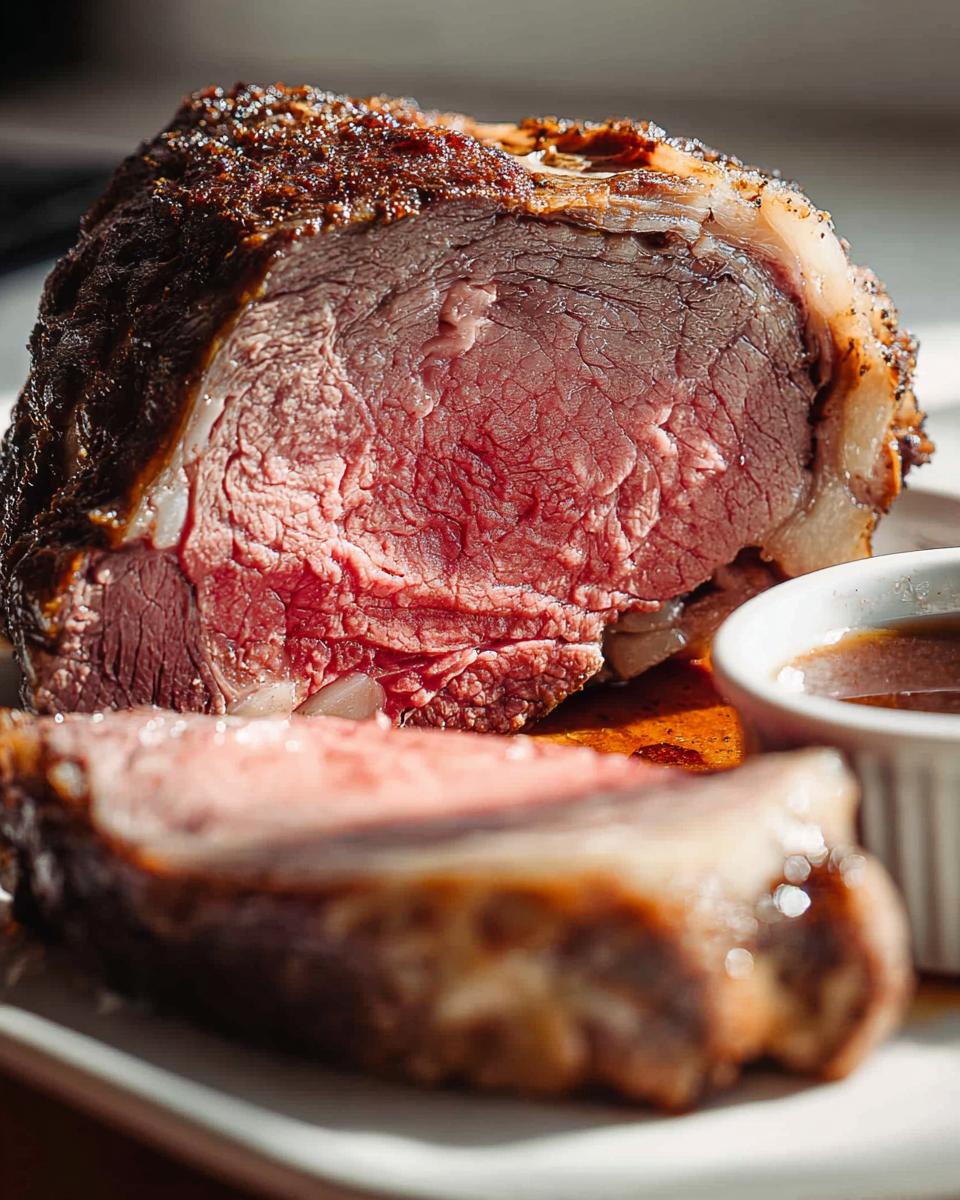
Now, I want to give you a ballpark idea of what you are taking in with this incredible meal, but please take this with a huge grain of salt! The actual nutritional facts for the Prime Rib Au Jus – The Wooden Skillet, based on 8 servings, look something like this: 517 calories, 46g of fat, and 24g of protein.
Since this is based on the specific cut of meat I used, your numbers will definitely change depending on the trimmings and fat content of your particular roast. Always remember these are just helpful estimates!
Share Your Prime Rib Experience
That’s it! You’ve got everything you need to create the most succulent prime rib roast your family has ever tasted, complete with that savory au jus that ties the whole experience together. Seriously, I want to hear all about it!
Did you follow the pat-dry technique? Did you manage to keep the oven door shut during that critical roasting phase? I’m so invested in you succeeding with this!
Please, if you make this showstopper dinner, come back down here and leave a star rating—it helps other home cooks feel brave enough to try it next time. And if you have any little tweaks that worked perfectly for your oven or your cut of meat, drop those questions or tips in the comments below. I love chatting about cooking disasters and triumphs!
If you need to reach out directly with ingredient questions or just want to send me a picture of your perfectly sliced roast, you can always get in touch with me over at my contact page. Happy roasting, friends!
Prime Rib Au Jus – The Wooden Skillet
Ingredients
Equipment
Method
- Combine salt and pepper in a small bowl. Pat the prime rib dry with paper towels. Rub the salt and pepper mixture all over the rib roast at least 2 hours before cooking. You do not need to use all of the mixture; use your best judgment. After rubbing with salt and pepper, leave the roast out to come to room temperature.
- Preheat your oven to 500 degrees F.
- Place the rib roast on a roaster, fat side up, and put it in the oven uncovered. A roasting rack is not needed.
- Cook the rib roast for a total of 15 minutes per pound for a medium-rare center. If your roast is particularly thick, cook for 16 or 17 minutes per pound. The first 20 minutes will be at 500 degrees F. Then, reduce the oven temperature to 325 degrees F. for the remainder of the cooking time.
- Do not open the oven at any point during cooking. Use a wireless meat thermometer if you prefer to monitor the internal temperature.
- Remove the roast from the oven and immediately cover it with foil or the roaster cover. Let it rest for 20-30 minutes. The meat will continue to cook during this time.
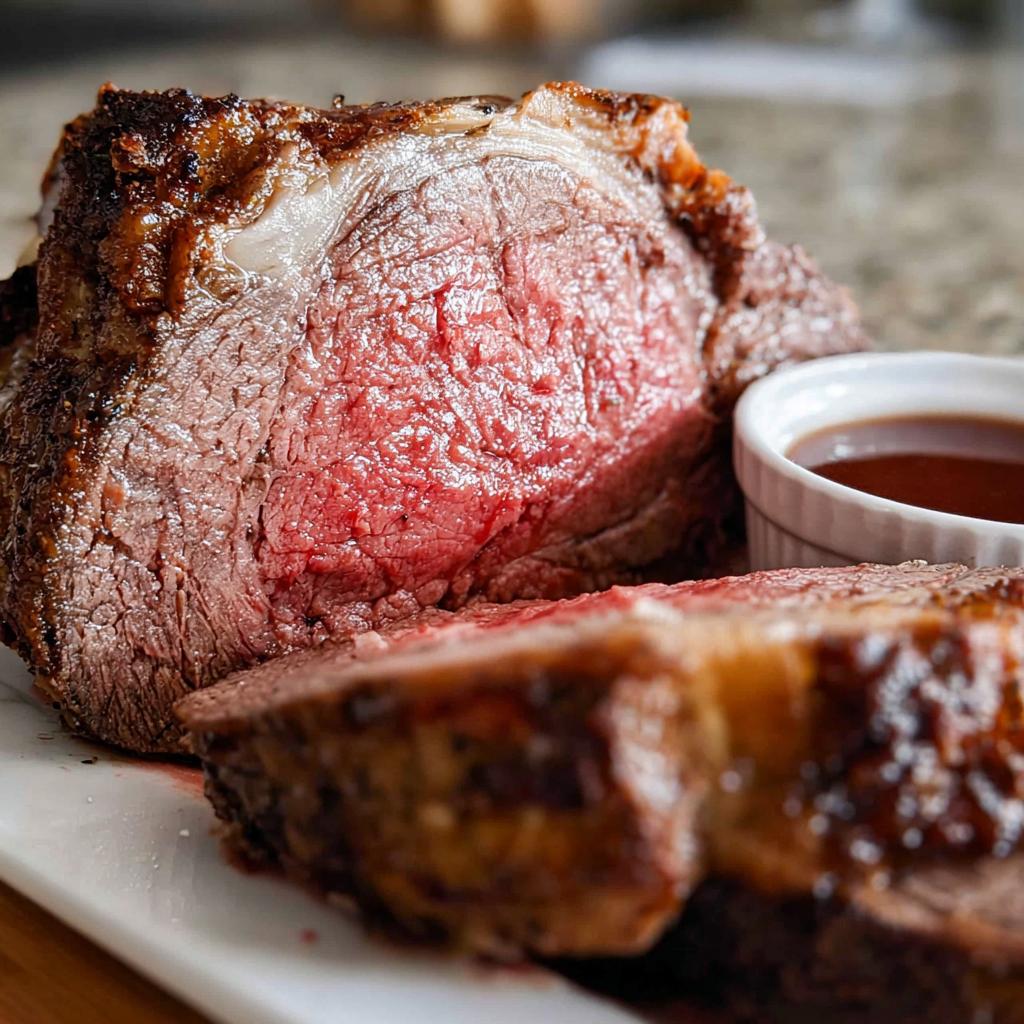
- Slice the prime rib into steaks and serve immediately. Consider serving with creamy horseradish sauce and homemade prime rib au jus.