
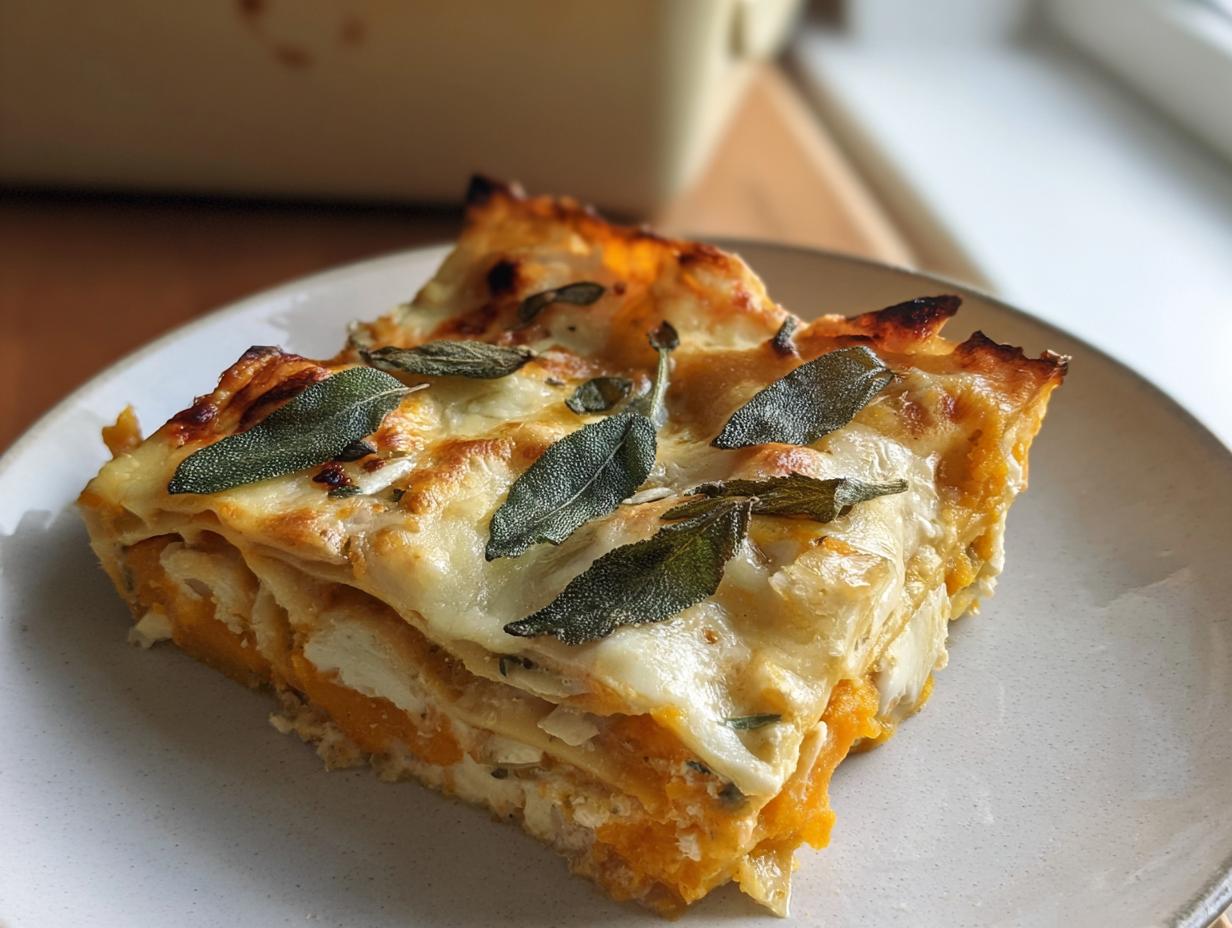
When that first truly chilly autumn afternoon hits, doesn’t your kitchen just scream for comfort food? Forget the heavy meat stuff for a second because I have found the absolute perfect centerpiece for any upcoming gathering: my Butternut Squash and Sage Lasagna. This isn’t just a side dish; it’s hearty, it’s gorgeous, and it’s easily the best vegetarian holiday main you’ll ever serve.
I still remember the first time I decided to make a butternut squash and sage lasagna. It was a chilly autumn afternoon, and the smell of roasting squash filled my kitchen, wrapping me in comfort. As I layered the squash with creamy cheese, fragrant sage, and gooey mozzarella, I couldn’t help but feel like a culinary alchemist. The moment my family took that first bite, I saw their eyes light up—a memory I cherish. Cooking can be a journey of exploration and celebration, and discovering new ways to make familiar dishes feel special is what keeps my passion alive. Trust me, the secret is in that rich, roasted squash puree combined with a nutty browned butter béchamel. You absolutely have to try this recipe! You can check out even more of my creations over at my recipe index, or see where this specific idea came from at Kendall & Roni’s site.
Why This Butternut Squash and Sage Lasagna Works So Well
Honestly, this dish is a total showstopper, which is why I keep sneaking it onto the Thanksgiving table even though Aunt Carol insists on her heavy roast. It’s all about balance in the kitchen, and this lasagna hits every flavor note perfectly. It’s comforting without being boring!
- It’s surprisingly light yet totally satisfying—you actually feel good after eating it!
- The texture adventure is real: soft layers mingling with that slightly crispy top cheese.
- It looks incredibly impressive, making zero effort seem like you spent days cooking.
Flavor Profile of the Butternut Squash and Sage Lasagna
You get this incredible sweetness from the roasted butternut squash puree, which plays so nicely against the earthy, almost peppery hit of fresh sage. But the real star? That nutty, deep warmth from the browned butter in the sauce. It ties everything together beautifully. It tastes expensive and cozy all at once!
Perfect for a Vegetarian Holiday Main
If you’re looking to lighten up the table or need a show-stopping centerpiece that doesn’t involve carving anything, this is your answer! It’s rich enough in texture and flavor to genuinely anchor the entire meal. Seriously, you won’t miss the meat one bit—this is a true vegetarian holiday main dish that everyone will rave about.
Gathering Ingredients for Butternut Squash and Sage Lasagna
Okay, gathering ingredients is sometimes the most stressful part, right? You don’t want to show up short on the good stuff, especially with something this special. I’ve broken down everything by component because you need to be organized before you start roasting veggies. Pay attention to the notes here—they are crucial for nailing that perfect texture later on! Getting this list right ensures your butternut squash pasta base is absolutely flawless.
For the Butternut Squash Puree
This is the heart of the lasagna, so fresh is best here. We are roasting to concentrate that gorgeous, sweet squash flavor.
- A big one: 1 large butternut squash—and I mean large, aiming for about 3 pounds so you have plenty of puree.
- 1 whole head of garlic. Yes, the whole thing! It roasts up so sweet.
- Just a drizzle of Olive oil for roasting. Don’t drown it!
- A good shake of Kosher salt for the roasting seasoning.
For the Browned Butter Béchamel (Sage Cream Sauce)
This sauce is what elevates this from “squash casserole” to gourmet heaven. Browning the butter is non-negotiable; it brings in that deep, nutty background note, which is essential for our sage cream sauce.
- 6 Tbsp unsalted butter—this is what we caramelize for that rich color and flavor.
- 1/3 cup flour—this is the thickener for our roux.
- 2 1/2 cups whole milk. I really stick to whole milk here; skim just doesn’t give the right mouthfeel for this creamy sauce.
- A tiny pinch of nutmeg—it’s the secret spice in any good white sauce.
- 1 1/4 tsp Kosher salt for seasoning the batch.
For Assembly and Garnish
Time to talk cheese and pasta layers! Remember that note on your pasta choice; it saves so much heartache later on.
- 1 lb pasta. If you use dried, you *must* par-cook it slightly so it’s al dente, unless you are using oven-ready sheets, naturally.
- 16 oz mozzarella cheese, grated. Get it grated yourself if you can—the pre-shredded stuff has anti-caking agents that stop it from melting perfectly.
- 2 cups Parmesan Cheese, grated (use your microplane!). We want fine, fluffy snow, not chunky shredding here.
- 2 Tbsp unsalted butter, reserved for frying the sage later.
- 1 bunch sage. Make sure the leaves are separated from the stems before you start cooking!
Expert Steps for Roasting and Preparing the Butternut Squash and Sage Lasagna Filling
Alright, this is where we build the flavor foundation for our amazing butternut squash pasta layers! Success here means a creamy, deeply flavored filling that doesn’t leave your lasagna watery. My biggest tip, learned the hard way after one too-runny lasagna attempt, is making sure those vegetables are roasted until they are practically melting before we even think about blending them.
Roasting the Squash and Garlic
First things first: crank that oven up to 400 degrees F. We want high heat for quick caramelization! Slice that big squash in half, scoop the seeds out, and lay it cut-side up right on your sheet tray. Drizzle with oil and salt—don’t be shy! Do the same trick with your whole head of garlic, wrapping it tight in foil. Roast everything for about 40 to 45 minutes. You’ll know they’re done when a knife goes through the squash like butter. Seriously, push it in; if you meet resistance, put it back in!
Creating the Smooth Butternut Squash Base
Once it’s cool enough to handle—and this cooling time matters so you don’t burn your blender—scoop out that gorgeous flesh and squeeze in all the sweet, roasted garlic. Toss it into your blender. Now, here’s the trick for the perfect layer in this Butternut Squash and Sage Lasagna: add about 1/2 cup of water to start and blend it until it’s completely silky. If it looks like thick hummus, you’re golden. If it’s too stiff to spread easily, splash in a tiny bit more water until it’s that perfect, easy-to-spread consistency. This puree is going to be the luscious base of your entire dish. You can even check out how I treat garlic in other recipes for inspiration!
Making the Browned Butter Béchamel for Butternut Squash and Sage Lasagna
If the squash is the heart of this fall lasagna recipe, then this sauce is the soul! Seriously, ditch the jarred stuff—this béchamel uses browned butter, which takes it from boring to brilliant. It adds this incredible nutty depth that matches the earthiness of the squash so perfectly. It’s a few extra minutes, but wow, does it make a difference in the final flavor profile! You can see how I use creamy sauces in other ways over at my seafood sauce recipe, but this one is pure comfort food!
Browning Butter and Making the Roux
Grab those 6 tablespoons of butter and toss them into your saucepan over medium heat. Now, listen and watch. The butter will melt, then start to foam up. You need to swirl it gently until the foam subsides and you start seeing little brown bits forming at the bottom of the pan. It’s going to smell amazing—like popcorn or toasted nuts. That’s your cue! Immediately toss in the flour and stir like crazy for a full minute. We have to cook out that raw flour taste, but don’t let it burn, or you gotta start over! Take it from me; I rushed this once, and the whole sauce tasted pasty.
Achieving the Perfect Béchamel Consistency
Here’s where you need a steady hand. Turn the heat down low, and start streaming in that beautiful whole milk while whisking constantly. I mean *constantly*! If you stop, you get lumps, and nobody wants lumpy sauce. It’ll look weirdly thick at first, but keep going. Bring it up to a gentle simmer, and let it bubble for about two minutes, whisking away. When it’s ready, dip a wooden spoon in it; if the sauce stays put and coats the back of the spoon nicely, you’re done! Sprinkle in your nutmeg and salt, stir it one last time, turn off the heat, and get ready to layer.
Assembling Your Butternut Squash and Sage Lasagna
Ooh, this is the fun part! We’ve got the roasted veggie base done, we’ve got that amazing browned butter sauce ready, and now we stack it up! Remember, we are switching gears and dropping the oven temperature down to 350 degrees F for the baking stage. We want this to melt together slowly until it’s perfectly hot and bubbly, not stressed out by high heat. I always use my trusty 9×13 inch baking pan for this—it’s the perfect size to get nice, even layers, and you can find a similar guide on how I prep those big pans for my breakfast bakes if you need a visual.
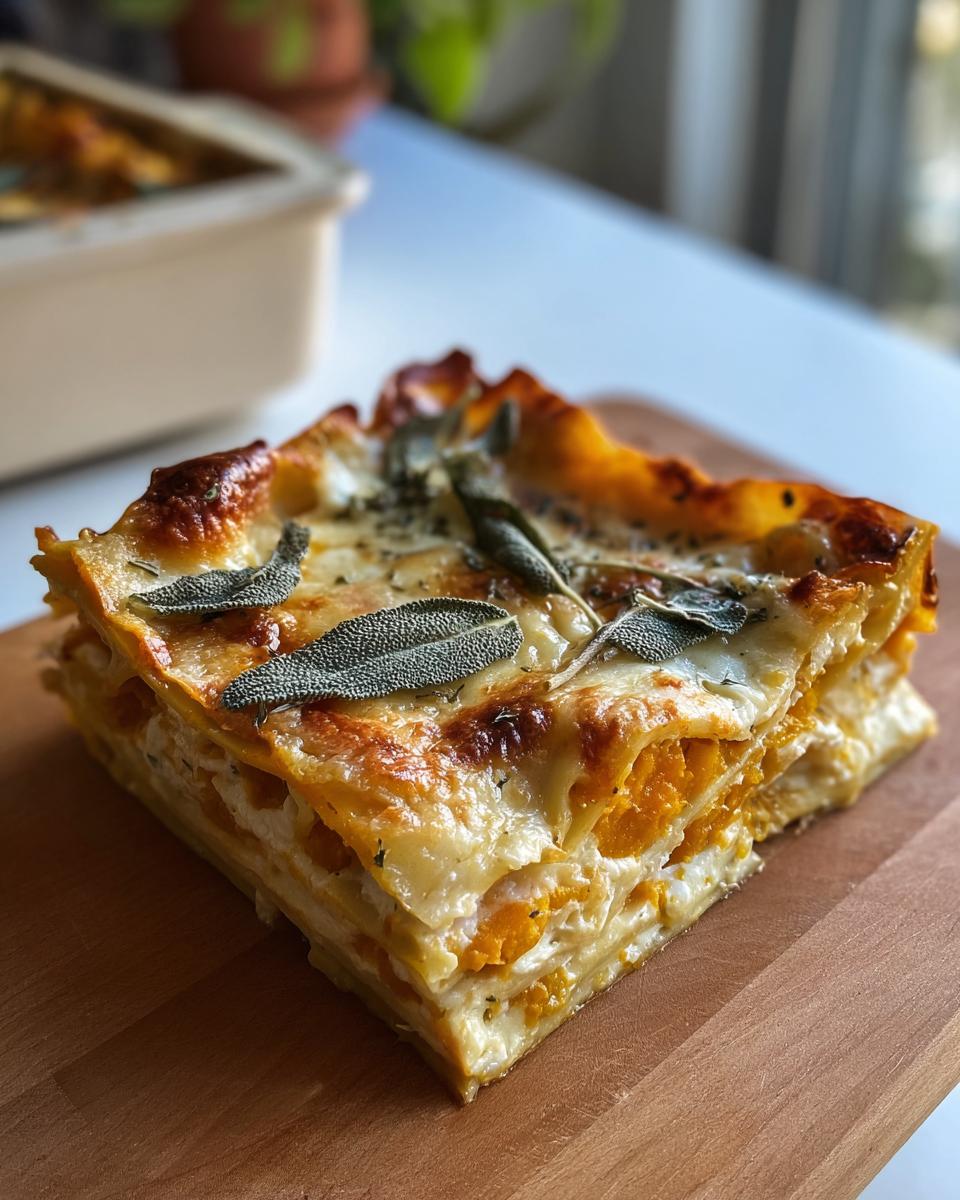
Layering Sequence for the Butternut Squash and Sage Lasagna
Listen closely, because this sequence repeats, and getting the distribution right is key to that perfect bite every time where you get a little of everything.
- First, lay down a thin, protective smear of that butternut squash puree right on the bottom of the pan. This stops the first layer of noodles from sticking, which is just good cooking sense!
- Now for the first of your three big layers: Lay down your noodles. If they are dried and par-cooked, just make sure they overlap slightly.
- Next, spread about one-third of your remaining squash puree evenly over the noodles.
- Drizzle or spoon over about one-quarter of that beautiful béchamel sauce—don’t drown it, just a good, steady coating.
- Sprinkle generously with one-quarter of your mozzarella and then a dusting of one-quarter of your finely microplaned Parmesan.
- Repeat! Noodles, squash, béchamel, mozzarella, Parmesan. Do this two more times until you run out of your main filling components.
- For the very top layer, lay down your final noodles, spread the *last* bit of the béchamel sauce over them, and make sure you cover it all with the final portions of mozzarella and Parmesan. Make sure the edges are coated so they don’t dry out in the oven!
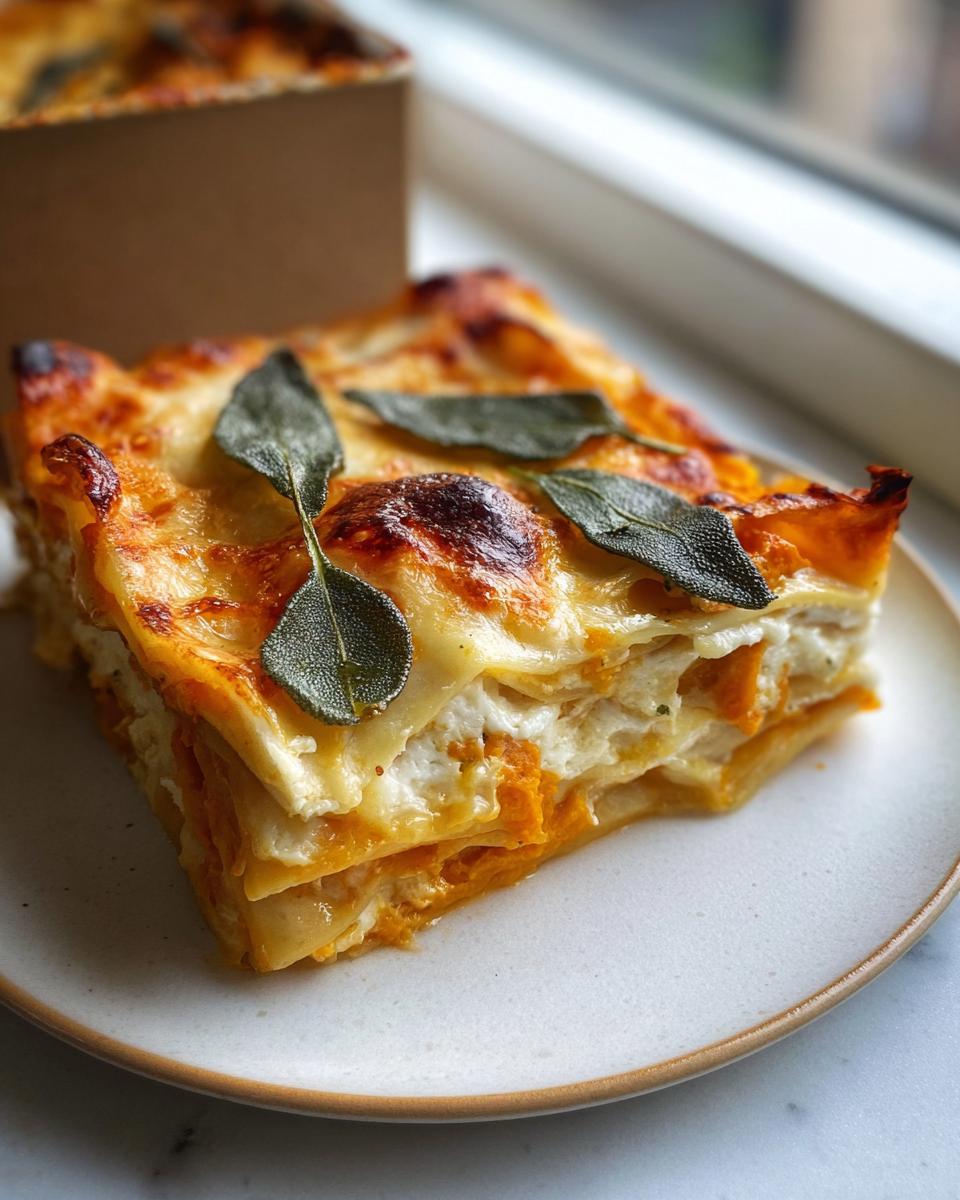
That’s it! That final cheesy top layer turns into the most glorious golden crust once it’s done baking at 350 degrees.
Baking and Finishing Touches for Butternut Squash and Sage Lasagna
We’ve done the hard part—the roasting, the sauce-making, and the meticulous layering! Now it’s time for the oven to work its magic. Remember, we dropped the heat down to 350 degrees F for this part. We want a slow, gentle bake so all those layers get melty and the sauce gets thick without the top burning too fast. This is what turns our beautiful assembly into the ultimate fall lasagna recipe experience!
Cover that 9×13 pan loosely with foil for the first 30 minutes. This traps the steam and makes sure the noodles get perfectly soft, even the edges. Then, peel that foil off and let it bake uncovered for another 15 to 30 minutes. You’ll know it’s done when the whole thing is bubbling vigorously around the sides, and that top layer of Parmesan and mozzarella is melted into a gorgeous, deep golden-brown crust. Honestly, the smell alone when this comes out is worth the effort!
Frying Crispy Sage Garnish
Don’t skip this step! It’s the easiest flourish, and it makes this lasagna look and taste incredible. While that lasagna is resting (which it needs to do, see the Tips section later!), grab a large skillet and melt those reserved 2 tablespoons of butter over medium heat. Once it shimmers, carefully toss in all those gorgeous, separated sage leaves. Woo boy, they’ll immediately sizzle and try to jump out, so stand back a touch! They only take about 30 seconds per side to get beautifully brown and crispy. You’ll know they’re done when they look slightly translucent and totally rigid.
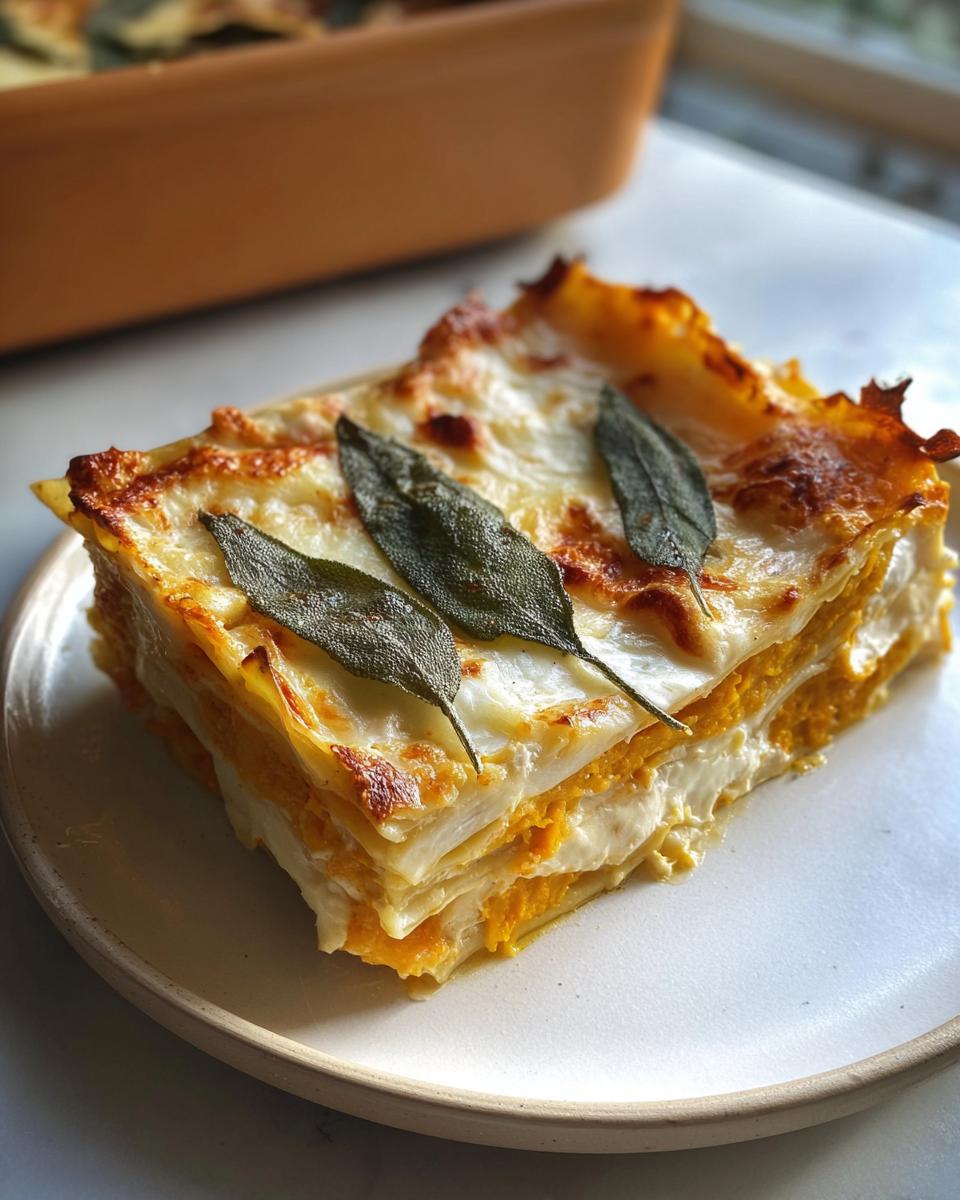
Use a slotted spoon to lift them right out onto a paper towel to drain. The butter left behind in the pan? That’s liquid gold! You can drizzle a tiny bit of that sage-infused butter right over the top before scattering on the crispy leaves. It adds such an unexpected aromatic pop when you take that first bite.
Tips for the Best Butternut Squash and Sage Lasagna
You’ve nailed the roasting and the sauce, but before you cut into this beautiful creation, stick around for a few nuggets of wisdom I’ve picked up through trail and error. Lasagna is one of those dishes that looks simple on paper, but temperature and moisture control are everything! I swear, my first attempt at *any* baked pasta dish ended up watery because I skipped the resting step—it was a disaster that needed a spoon to eat!
Here are the things I rely on every time to ensure this butternut squash lasagna layers perfectly:
- The Great Noodle Debate: If you are using dried lasagna noodles that *aren’t* labeled oven-ready, don’t boil them for the full time the package suggests! Cook them for at least two minutes less than the package says. I mean it! They are going to finish cooking in that hot, steamy oven environment during the bake time. If they are too soft coming out of the pot, they turn to mush under the cheese!
- Taming the Squash Moisture: If your roasted squash puree seems overly wet, you need to cook the moisture out before spreading it. Just put the puree back into that saucepan after blending (before layering) and simmer it gently over medium-low heat for about 5 to 8 minutes, stirring often. You want it thick enough that it doesn’t leak out the sides when you press the layers together.
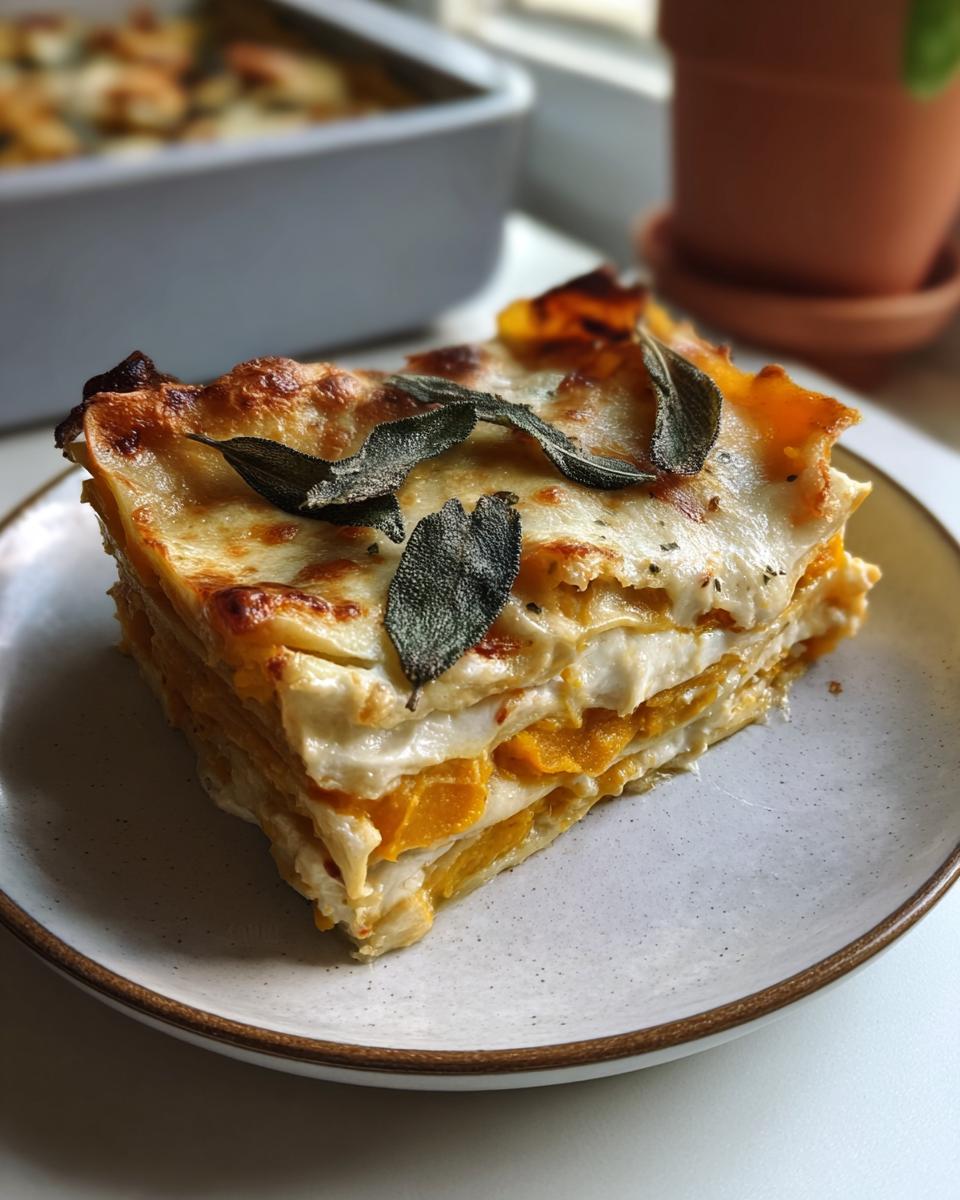
- Cool Down Time is Crucial: This is the lesson I learned the hard way! When that beautiful lasagna comes out of the oven, it’s molten lava and still totally liquid inside. You have to let it rest. Seriously, set a timer for at least 20 minutes before slicing. This allows the layers to settle, the sauce to firm up slightly, and prevents that dreaded messy puddle on the plate. Patience really is the final ingredient here.
- Cheese Distribution Matters: Make sure you are layering cheese evenly. If you pile all your mozzarella in the middle, the top layer will burn before the insides are heated through. I actually reserve a tiny sprinkle of Parmesan to toss *into* the very bottom layer of squash puree; it helps bind things together down there. You can find some other secrets about building great layers in my guide to making the perfect sauces and gravies!
Ingredient Alternatives for Butternut Squash Pasta Dishes
I love sticking close to the recipe, but sometimes we need to swap things out based on what’s in the fridge or maybe a dietary need pops up. Good cooking is about flexibility once you understand the *why* behind the ingredients. Since this is essentially a high-end butternut squash pasta dish baked into a casserole, the flavor pillars are the squash, the brown butter, and the sage. Keep those elements strong, and you can usually swap other things!
If you are feeling adventurous, here are a few swaps that work really well:
- Cheese Swap: If you aren’t big on mozzarella, Fontina melts beautifully and offers a slightly earthier flavor that complements the squash. For the Parmesan, Pecorino Romano is a sharper, saltier substitute that gives everything a nice little kick.
- Herb Additions: Sage is the star, but don’t be afraid to add a little something else to the roasted squash puree! A teaspoon of fresh, finely chopped rosemary mixed in with the sage is divine, or even a pinch of dried thyme in the béchamel sauce adds a fantastic savory background note.
- Nut-Free Finish: If you wanted to add crunch instead of frying sage, walnuts or pecans toasted until dark brown and chopped roughly make an excellent, rustic topping. They echo the nutty flavor of the browned butter perfectly! You can find ideas for great pairings over at my chicken and vegetable recipes page that might spark other substitution ideas.
Frequently Asked Questions About Butternut Squash and Sage Lasagna
Can I make this Butternut Squash and Sage Lasagna ahead of time?
Yes, absolutely! This is a fantastic dish for prepping a day ahead, especially if you’re hosting. You have two options: You can fully assemble the entire lasagna, cover it tightly with plastic wrap and then foil, and keep it in the fridge for up to 24 hours. When you bake it, you’ll need to add about 15 to 20 minutes to the covered baking time since it’s starting cold. Or, if you want to bake it right away, skip the 20-minute cooling time completely and enjoy the melted gooiness! Just know the slices won’t hold their shape as well.
What kind of pasta works best for this fall lasagna recipe?
For the *best* texture, I always suggest fresh lasagna sheets if you can get them—they cook perfectly right in the layers without needing pre-boiling. If you use dried, stick to the regular kind and par-cook them slightly, as noted in the tips above. Avoid the extra-wide, ruffled noodles; they tend to absorb too much sauce and make the middle gummy in a casserole like this. Oven-ready noodles are fine but add an extra splash of something liquid (milk or water) to your layering process just to be safe!
How do I store leftovers of this vegetarian main?
Leftovers are truly the best part of making a massive casserole! Once completely cooled, cover the pan tightly with plastic wrap or scoop individual portions into airtight containers. This amazing vegetarian main will keep beautifully in the fridge for 4 to 5 days. When reheating, I prefer to do single slices in the microwave, covering them loosely with a damp paper towel to bring back some moisture. If you’re reheating the whole thing, cover it with foil and bake at 350 degrees F until heated through, maybe 20 minutes or so. Feel free to reach out if you have any other burning questions on my contact page!
Ingredient Alternatives for Butternut Squash Pasta Dishes
I love sticking close to the recipe, but sometimes we need to swap things out based on what’s in the fridge or maybe a dietary need pops up. Good cooking is about flexibility once you understand the *why* behind the ingredients. Since this is essentially a high-end butternut squash pasta dish baked into a casserole, the flavor pillars are the squash, the brown butter, and the sage. Keep those elements strong, and you can usually swap other things!
If you are feeling adventurous, here are a few swaps that work really well:
- Cheese Swap: If you aren’t big on mozzarella, Fontina melts beautifully and offers a slightly earthier flavor that complements the squash. For the Parmesan, Pecorino Romano is a sharper, saltier substitute that gives everything a nice little kick.
- Herb Additions: Sage is the star, but don’t be afraid to add a little something else to the roasted squash puree! A teaspoon of fresh, finely chopped rosemary mixed in with the sage is divine, or even a pinch of dried thyme in the béchamel sauce adds a fantastic savory background note.
- Nut-Free Finish: If you wanted to add crunch instead of frying sage, walnuts or pecans toasted until dark brown and chopped roughly make an excellent, rustic topping. They echo the nutty flavor of the browned butter perfectly! You can find ideas for great pairings over at my chicken and vegetable recipes page that might spark other substitution ideas.
Frequently Asked Questions About Butternut Squash and Sage Lasagna
Can I make this Butternut Squash and Sage Lasagna ahead of time?
Oh yes, this is totally doable! Since this recipe is one of my favorite *fall lasagna recipe* options for busy days, I prep it all the time. You can assemble the whole thing—noodles, squash goo, sauce, cheese, the works—cover it super tight with plastic wrap and then foil, and stick it in the fridge for a full day. Just remember that when you go to bake it, you need to add about 15 to 20 minutes to the total time because it’s starting off cold. And if you want to bake it the day before, that’s fine too! Just let it cool completely after baking, then slice and store it. Reheating slices works like a charm!
What kind of pasta works best for this fall lasagna recipe?
If you want the absolute, most luxurious texture, fresh pasta sheets are the winner hands-down. They don’t need any pre-cooking, and they just melt into the layers beautifully. If you’re using dried pasta, make sure you cook it until it’s noticeably underdone—I’m talking firm, almost stiff. They’ll finish cooking perfectly submerged in the warm layers. If you use oven-ready noodles, which some people prefer, just make sure you are a little generous with that béchamel sauce in the layers. The sauce is what hydrates those dry sheets, so don’t be stingy!
How do I store leftovers of this vegetarian main?
Store every last bit! Leftovers of this hearty vegetarian main are excellent. Once it’s totally cool, I transfer mine into sturdy, airtight containers. You can keep it in the fridge for about four days, easy. When you’re ready to eat it, I skip the microwave for a huge portion because it steams the top layer oddly. Instead, I pop a slice or two on a microwave-safe plate, cover it loosely with a paper towel (to trap a tiny bit of steam), and heat it until hot. For reheating a whole pan, cover it with foil and warm it up in a 350-degree oven for maybe 20 minutes or so. It comes back to life so well! Need to reach out with more questions? Feel free to check out my contact page!
Butternut Squash and Sage Lasagna
Ingredients
Equipment
Method
- Pre-heat your oven to 400 degrees F.
- Cut the butternut squash in half lengthwise. Place the halves on a sheet tray, flesh side up. Drizzle the flesh with olive oil and a pinch of kosher salt, rubbing to distribute.
- Cut about 1/4 to 1/2 of an inch from the top of the garlic head to expose the cloves. Drizzle with olive oil, sprinkle with salt, and wrap the head tightly in aluminum foil. Place the foil packet on the baking sheet with the squash.
- Bake for 40 to 45 minutes, or until the squash flesh is tender and the garlic is soft and golden brown. The squash is done when a paring knife enters the thickest part easily.
- Allow the squash and garlic to cool for 15 to 20 minutes. Scoop out the seeds from the squash halves. Squeeze the roasted garlic cloves from their skins.
- Transfer the squash flesh and roasted garlic to a blender. Add 1.5 teaspoons of kosher salt and about 1/2 cup of water. Blend until the mixture is smooth and spreadable, adding more water if necessary to reach the right consistency.
- Brown the 6 tablespoons of butter in a saucepan over medium heat.
- Add the flour to the browned butter and cook for 1 minute over low heat to remove the raw flour taste.
- Slowly stream in the milk while whisking constantly to prevent lumps. The mixture will thicken initially, then thin out as all the milk is added.
- Bring the mixture to a simmer over medium heat. Cook for 2 more minutes while whisking until the béchamel has thickened enough to coat the back of a spoon. Finish with a pinch of nutmeg. Turn off the heat and set aside.
- Pre-heat your oven to 350 degrees F.
- Spread a thin layer of the butternut squash mixture on the bottom of a 9×13 inch baking pan.
- Layer the lasagna: one layer of noodles, 1/3 of the remaining squash mixture, 1/4 of the béchamel, 1/4 of the mozzarella, and 1/4 of the Parmesan. Repeat this layering sequence two more times.
- Top with the final layer of noodles, the last 1/4 of the béchamel, and the last 1/4 of each cheese.
- Bake for 45 minutes to 1 hour, until the lasagna is bubbling and golden brown on top.
- While the lasagna bakes, heat the 2 tablespoons of butter in a large skillet. Add the sage leaves and fry them on both sides until crispy.
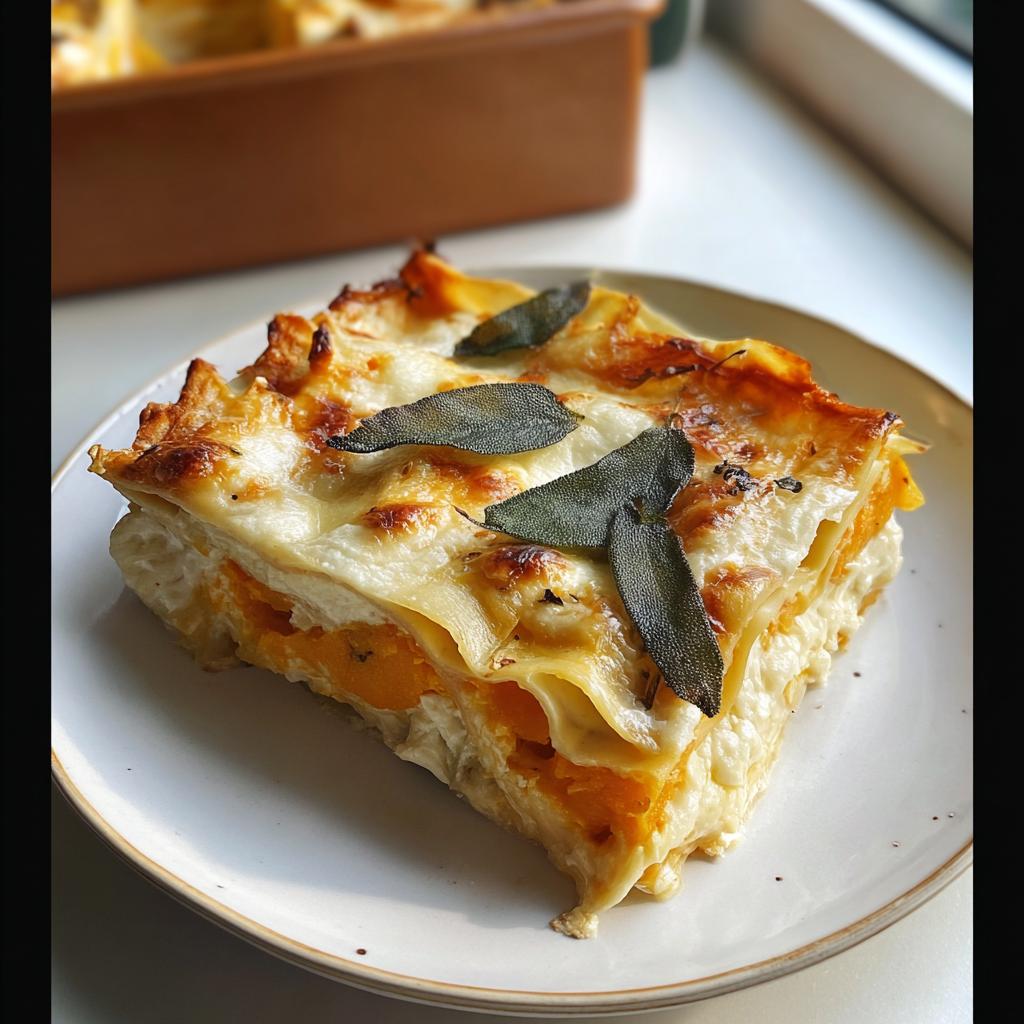
- Finish the lasagna by topping it with the crispy sage leaves before serving.