
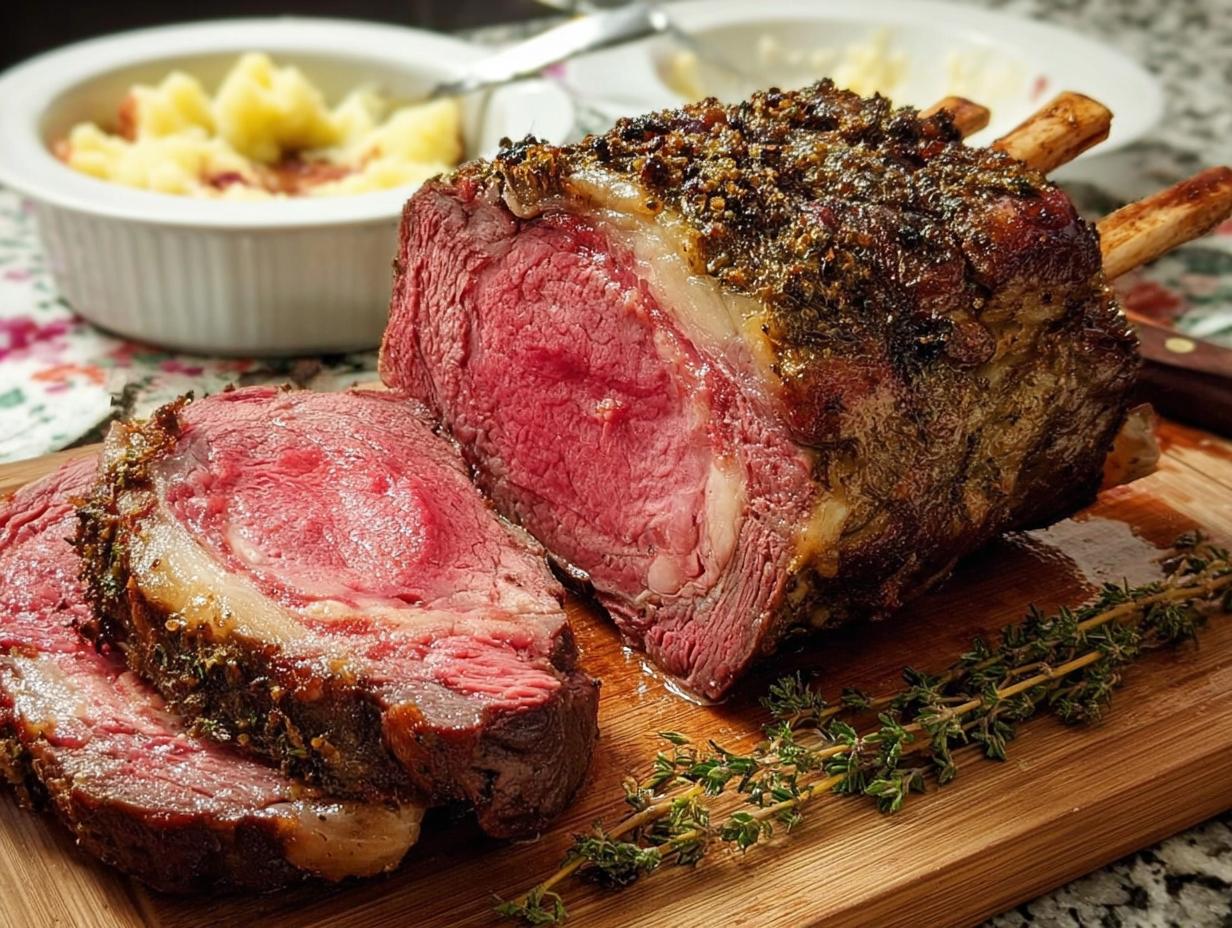
If you’ve ever looked at a massive cut of prime rib and just felt overwhelmed—thinking perhaps it was a recipe only reserved for restaurants or truly seasoned chefs—stop right there! I completely get that feeling. I’ll never forget the first time I roasted a prime rib for my family. It was the holiday season, and I was determined to create a meal that would bring everyone together. As I seasoned the cut of meat, imagining the aromas filling my kitchen, I felt a mix of excitement and anxiety. It takes a little bit of know-how, but trust me, mastering this dish is simpler than you think!
This guide, my friends, is where we conquer that stress together. We are going to unlock the secrets to creating a truly show-stopping main course that guarantees a Prime Rib — Juicy, Tender, Perfect (2025). When that roast finally rested on the table, the look of sheer delight on my family’s faces made every moment worth it. That juicy, tender slice was not just a meal, but a memory—a reminder that cooking for loved ones brings incomparable joy. You can absolutely achieve that same success at home, and I’m here to walk you through every single step.
We will focus on the searing technique and that crucial low-and-slow roast to lock in all the flavor. You’ll find all the tips you need to serve up incredible beef this year. If you’re looking to nail down all the best dinner preparation ingredients and temperatures, I have a great companion guide you might want to check out later for reference:
Why You Will Achieve Prime Rib — Juicy, Tender, Perfect (2025)
Cooking a massive roast like this can feel intimidating, I know! But seriously, stick to this method and you are guaranteed a win. This isn’t just another recipe; it’s a foolproof system designed to give you that flawless slice every single time. Forget dry edges and undercooked middles—we’re aiming for perfection here.
Here’s why this approach works so well for achieving that signature texture:
- You get that incredible, dark, savory crust thanks to the initial high-heat blast. It locks everything in!
- We monitor the temperature constantly, so you never have to guess when it’s done.
- The seasoning rub is so flavorful that even a little bit goes a long way, making prep stress-free.
- We follow the cooling/resting period religiously, which is the secret sauce for guaranteed juiciness!
If you’re interested in seeing what makes other dishes just as successful in terms of flavor balance, you should peek at my tips on perfect dinner ideas. But for now, let’s get this prime rib ready!
Essential Equipment for Prime Rib — Juicy, Tender, Perfect (2025)
Okay, before we even think about mixing salt and garlic, we need to talk tools. You can’t conquer a magnificent roast without the right gear! You probably have most of this stuff kicking around already. We definitely need your oven, of course, and a good large, heavy-bottomed skillet for that initial sear.
But listen to me—the rolling pin is for crushing peppercorns, not tenderizing the roast! And the real MVP? The meat thermometer. Honestly, if you try to guess doneness on a 14-pound piece of beef, you’re just asking for trouble. That thermometer is non-negotiable; it’s how we guarantee the juicy, tender result we’re aiming for. Don’t skip it!
Selecting and Preparing Your Roast for Prime Rib — Juicy, Tender, Perfect (2025)
Getting that perfect texture starts long before the oven gets hot, it starts at the butcher counter! You’ll be working with a beautiful rib eye roast, aiming for about 14 pounds, and you can choose bone-in or boneless—whichever you prefer, though I like the bones left in for extra flavor protection. Once you bring that beauty home, there’s one crucial first step before seasoning: patience!
You absolutely must take the roast out of the cold fridge and let it sit on the counter for about 30 minutes to an hour. Letting it come closer to room temperature helps it cook more evenly, which supports our goal for a juicy result. While you wait, you can get your amazing flavor base ready. Don’t worry about the recipe link for now, but keep my guide on best dinner ideas saved for later!
Ingredient Clarity: The Roast and Rub Components
Our flavor magic comes from the rub, which we whip up while the meat warms up. We need fresh stuff here! Strip the leaves right off those rosemary and thyme sprigs—don’t toss the stems in! We combine that with rock salt, minced garlic so it spreads easily, and whole peppercorns that we crush ourselves. Yes, crush them! I usually put the peppercorns in a plastic bag and give them a good whack with a rolling pin until they crack up nicely. This gives you texture and pops of sharp flavor where you least expect it, instead of just a dusty coating.
Mastering the Seasoning: How To Season Prime Rib
This is where we transition from prep work to pure flavor creation! Remember those whole peppercorns we put in a bag? Get that rolling pin out again—or use the bottom of a sturdy pan if you don’t have one handy—and make sure they are well crushed. We aren’t dusting here; we want bits and pieces!
Seriously, learning How To Season Prime Rib is all about creating a beautiful, thick layer of flavor insulation. Mix that crushed pepper with your copious Kosher salt, the fresh garlic (minced nice and fine!), and those gorgeous herbs you stripped from the sprigs. You should have a thick, fragrant coating ready to go.
Now, here’s the trick for unbelievable flavor penetration: we sear first! Heat up your skillet with a little olive oil until it’s almost smoking, then sear both sides of your roast halves until they get that dark, golden crust. *Then* we pour the remaining olive oil over the meat and pat that spice rub on everywhere you can reach. Make sure it sticks well. You’ll find more great flavor tips in my recipe index!
The Roasting Technique for Prime Rib — Juicy, Tender, Perfect (2025)
The moment of truth! After we sear that meat until it’s gorgeously dark brown, we have to drop the heat dramatically. This high-heat blast gives us that unbeatable crust, but we don’t want the outside to burn while the inside chills out, right? So, toss the roast into the oven and immediately drop the temperature down to 300°F (150°C).
Remember that instruction to cut the loin in half? This is why—splitting open that big roast allows the heat to penetrate the very center much faster and more evenly. We are patiently waiting for the meat thermometer to show us 125°F (52°C). That’s the ticket for rare to medium-rare magic. If you cook past that, you start losing the juiciness we worked so hard to achieve!
Once you hit that mark, pull it out immediately! The roast isn’t done resting yet, though. It needs a good 20 minutes to sit quietly. This is called carryover cooking, where the internal temperature keeps climbing and the juices redistribute themselves throughout the meat. It’s the final step in making sure your Prime Rib — Juicy, Tender, Perfect (2025). I always check out The Pioneer Woman’s version for great timing ideas, but sticking to this temperature guide is how you make the meal foolproof, especially when you check out my foolproof dinner methods!
Achieving the Perfect Internal Temperature for Prime Rib
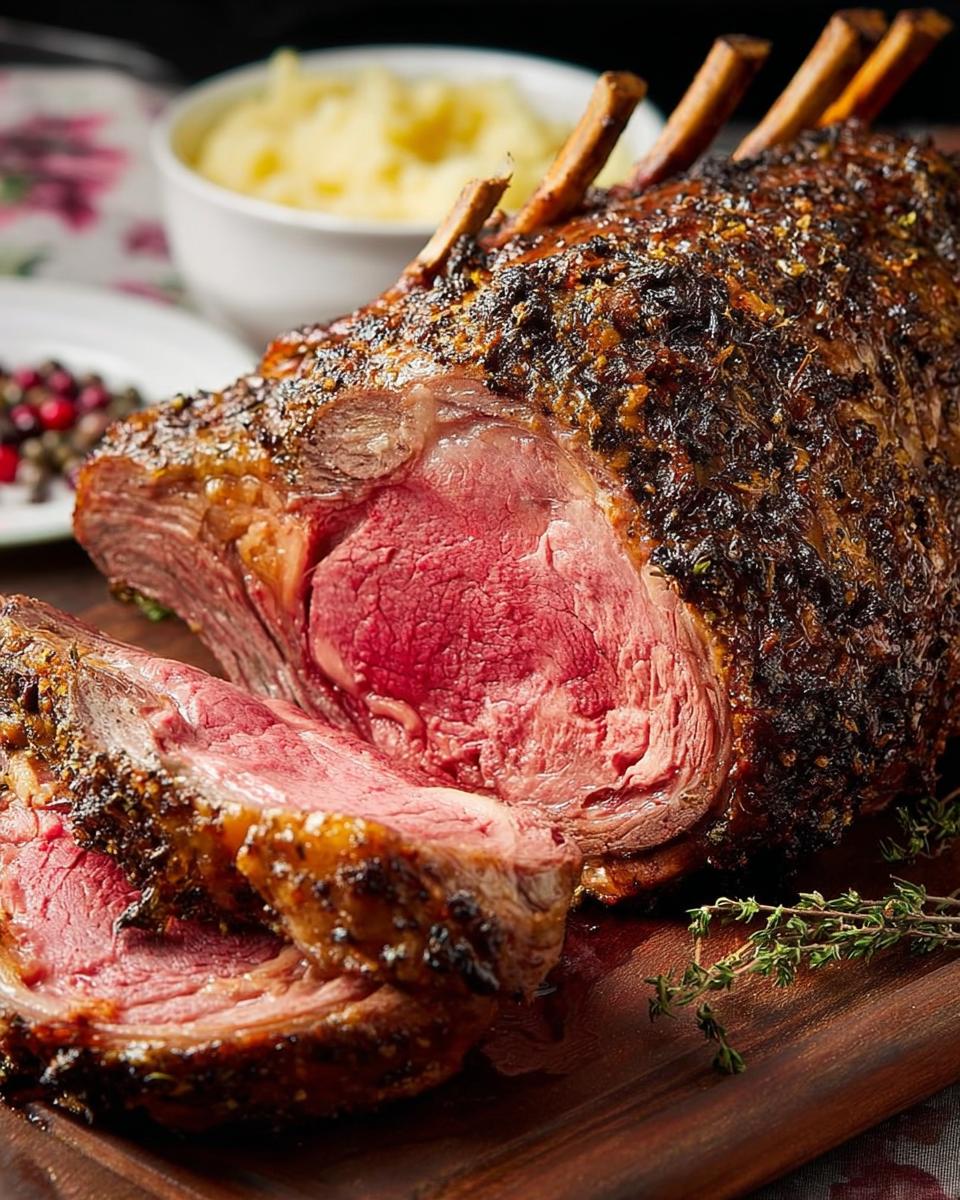
I cannot stress this enough: trust the thermometer over the clock! When you are searing, you are looking for that deep, dark golden-brown color—just color, no burning needed. Then, once you drop the heat, you are looking for the thermometer probe inserted deep into the thickest center part. We need 125°F for that stunning pink center.
Don’t just yank it out when you see the number! Give it a gentle poke with your finger—it should feel slightly firm but yield a little bit. That tenderness is the visual cue, but the temperature is the scientific proof. Keeping it below medium-rare is the ultimate cheat code for that incredibly juicy experience every time you serve your beautiful roast.
The Critical Resting Period for Prime Rib — Juicy, Tender, Perfect (2025)
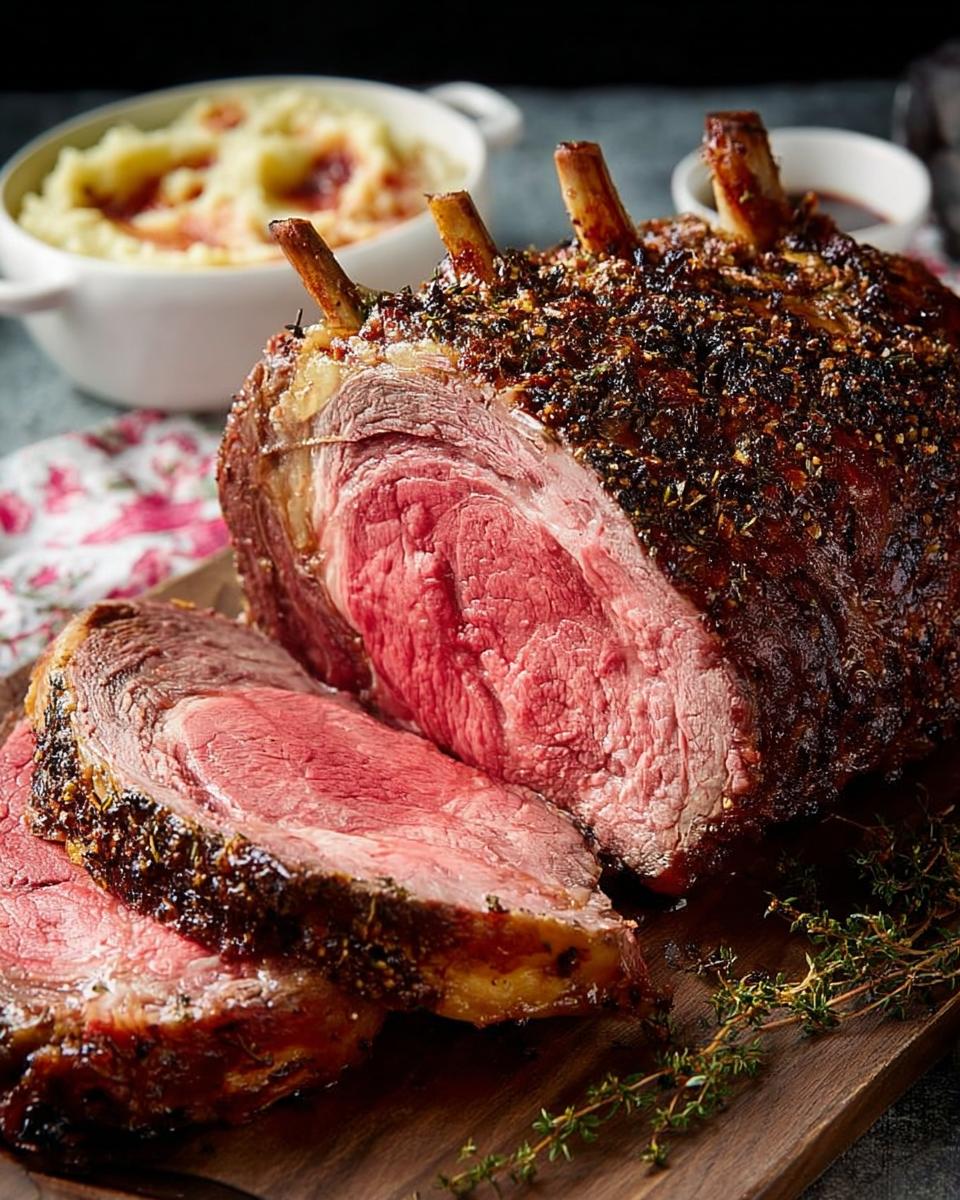
You’ve roasted it perfectly, your thermometer has sung its happy song, and you are tempted to slice it immediately. Please, resist that urge! This next step is absolutely non-negotiable if you want that ‘Juicy’ part of the promise.
You must let this massive roast rest for a minimum of 20 minutes, but honestly, 30 is even better if you can manage it. When the meat cooks, all those delicious juices are forced toward the center. If you cut right away, that juice spills out all over your cutting board, leaving you with dry meat. Resting lets the muscle fibers relax and redistribute those precious liquids back throughout the roast. This is the final key to a Prime Rib — Juicy, Tender, Perfect (2025)!
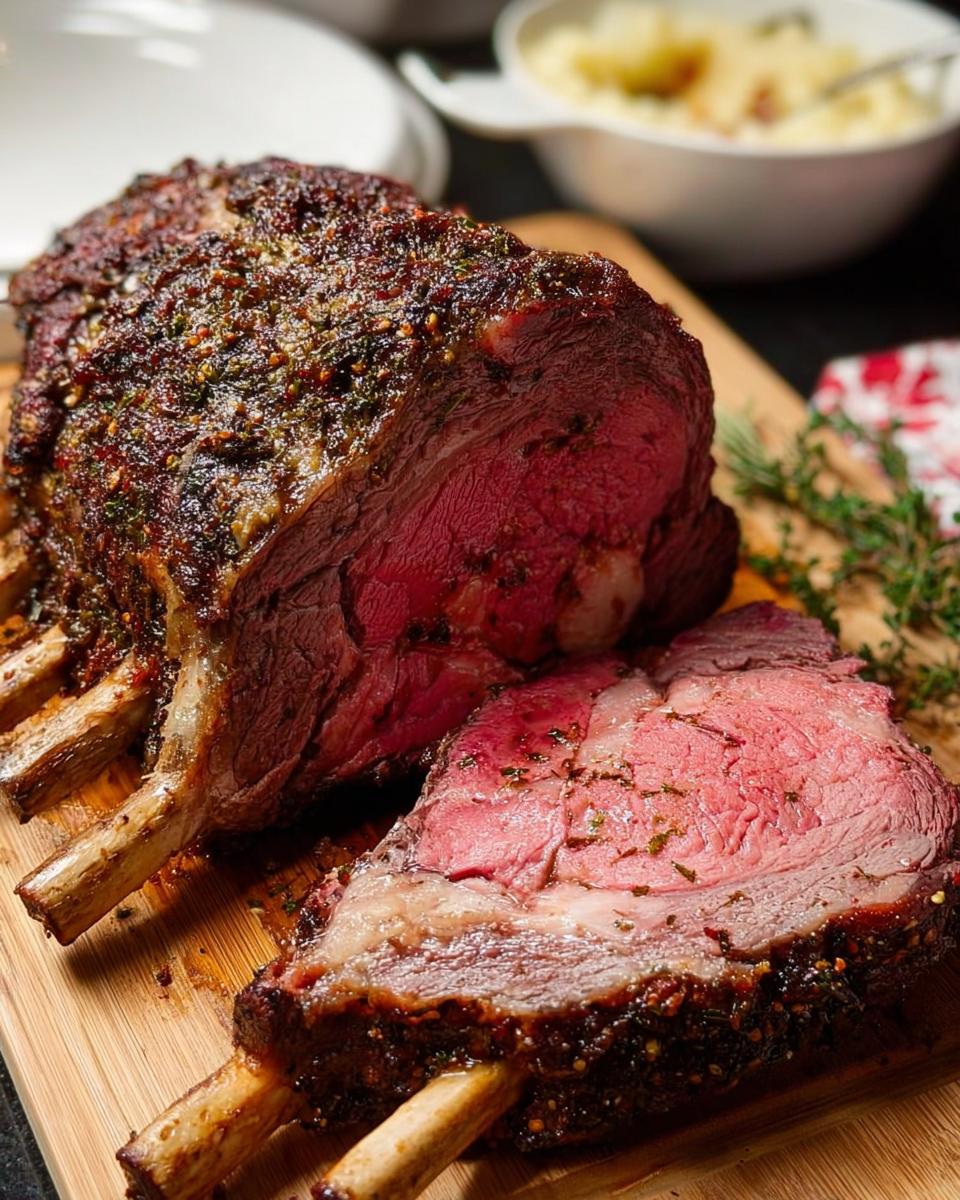
Tent it loosely with foil—don’t wrap it tight, or the crust will steam and go soft. While it rests, you can whip up a quick pan gravy using those delicious drippings! If you’re looking for some great recipe ideas to go alongside your roast once it’s rested, check out my soup and side dish guide.
Serving Suggestions for Your Christmas Rib Roast
Now that you’ve mastered the roast itself, we can talk about what goes on the platter alongside it! A gigantic, rich roast like this needs side dishes that offer a little brightness or a sturdy starch to soak up those incredible pan juices. This is the perfect main event for your Prime Rib For Christmas Dinner tradition!
I usually try to balance the richness of the beef. Think about earthy root vegetables, maybe some roasted Brussels sprouts tossed with balsamic reduction, or creamy mashed potatoes—the ultimate comfort food pairing. A light, sharp salad is also excellent to cut through the fat!
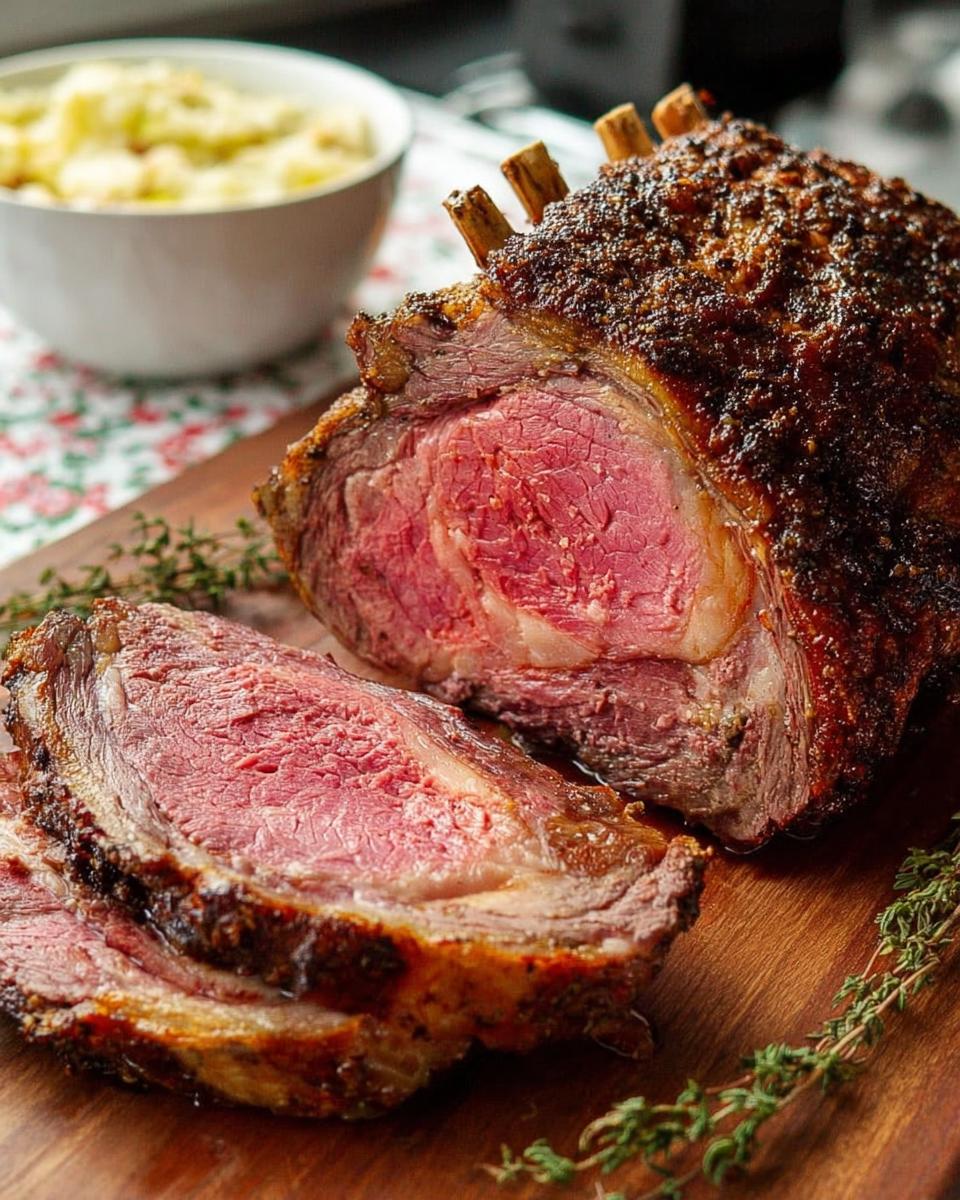
If you’re trying to plan out the rest of your weeknight meals while recovering from all this fancy cooking, I put together some ideas for quick dinner ideas you can use later. But right now, focus on those perfect slices of beef!
Storing and Reheating Leftover Prime Rib — Juicy, Tender, Perfect (2025)
Don’t you just love having leftovers of the king of roasts? It’s spectacular, but we have to treat it right so it stays tender, not tough!
The absolute best way to store any remaining meat is by slicing it thinly first. Then, tuck those slices snugly into an airtight container. You can keep it safely in the fridge for about three to four days. Don’t let it sit around longer than that!
When you go to reheat it—and this is key for juiciness—never blast it in the microwave! That’ll turn it jerky in seconds. Instead, gently reheat those thin slices in a little beef broth or au jus on the stovetop over low heat. Just dip them quickly until they are warmed through. It keeps that tenderness we worked for. You can find some fabulous recipes for using up leftovers in my quick 5-ingredient recipe roundup!
Frequently Asked Questions About Prime Ribs Recipe Success
It’s totally normal to have questions when tackling a showstopper like this! You want to ensure your Prime Ribs Recipe turns out exactly like mine did. I’ve gathered up the questions folks ask me most often when they’re getting ready to roast their magnificent beef.
I always tell people to check out my main recipe index for general tips, but here are the specific answers you need for this glorious roast!
What is the recommended cooking time per pound for Prime Rib?
That’s the age-old question, isn’t it? And here’s my honest answer: don’t rely on time per pound! We use time as a rough guide, sure, but it changes based on your oven and the roast’s starting temperature. We blast it at 500°F for about 20–30 minutes to sear, and that’s quick! After that, we switch to low and slow at 300°F. Success in this recipe comes from pulling it out when the thermometer hits 125°F, not when the timer dings. That temperature method is what guarantees the juicy center!
Can I skip searing the Prime Rib?
Oh man, I really, really hope you don’t, but I know life happens sometimes! Searing is what gives you that gorgeous, flavorful, crunchy brown crust—it’s essential for the ‘Perfect’ part of our promise. If you absolutely must skip it because you’re short on time, you just won’t get that deep, delicious exterior. You can place it in the 300°F oven right away, but be warned: the flavor profile will definitely be softer. It’s just not going to be as impressive!
Do I have to cut the roast in half?
I highly recommend it! Since we are dealing with a huge cut, if you follow the instructions and leave it as one big piece, the outside edges cook way faster than the middle. Cutting it in half, like we do in the steps, exposes more surface area to the heat evenly during the low-temp roasting phase. This ensures both halves reach that perfect internal temp around the same time. It makes for much more consistent, tender slices!
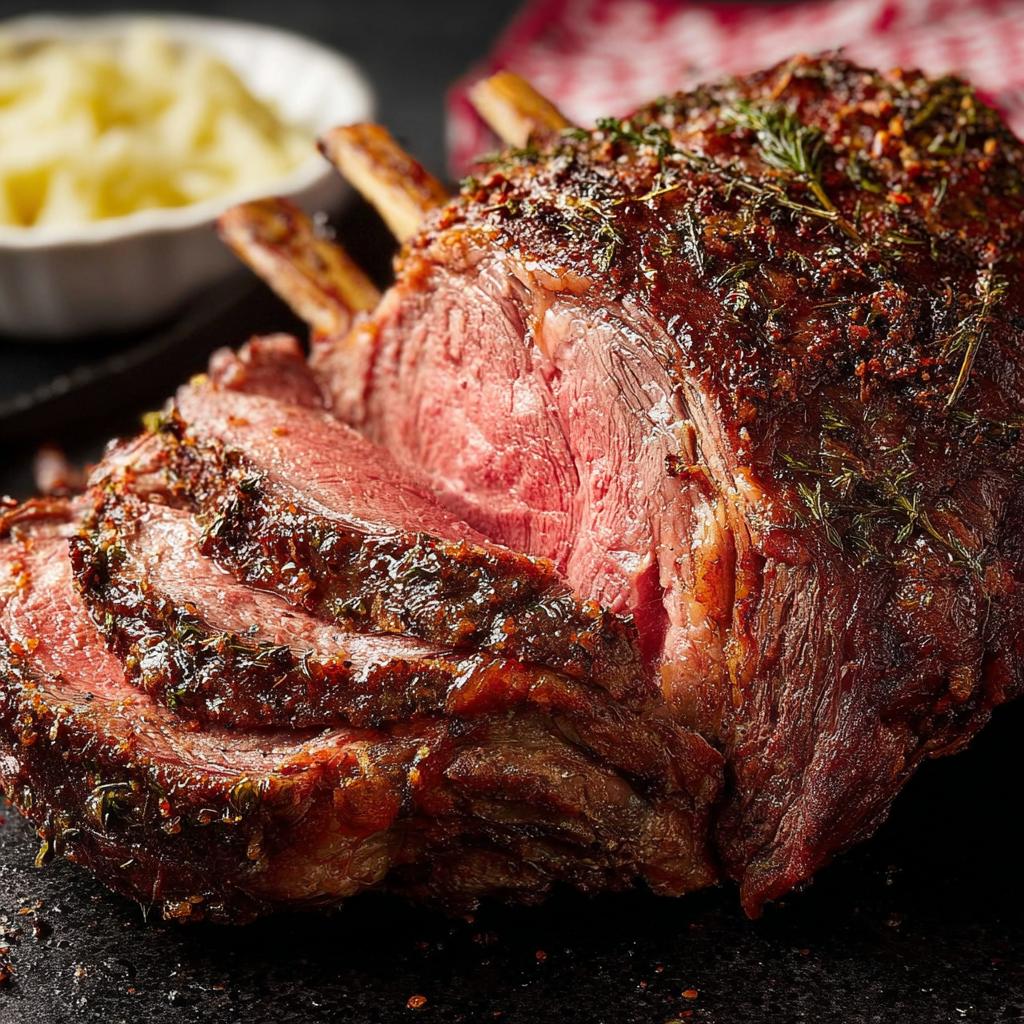
Prime Rib — Juicy, Tender, Perfect (2025)
Ingredients
Equipment
Method
- Preheat your oven to 500°F (260°C). Take the roast out of the refrigerator and let it sit at room temperature for 30 minutes to 1 hour.
- Cut the rib loin in half. Roast the halves separately for more controlled and even cooking.
- Heat a large, heavy-bottomed skillet over very high heat. Add 2 tablespoons of olive oil and sear both halves until they have a nice dark golden color. Place the tricolor peppercorns into a bag and crush them with a rolling pin. Strip the leaves from the rosemary and thyme sprigs. Mix the salt, crushed peppercorns, rosemary leaves, thyme leaves, and minced garlic together.
- Pour the remaining 4 tablespoons of olive oil over the rib loin halves. Sprinkle the rub mixture over the meat and pat it gently to help it stick. Roast for 20 to 30 minutes. Then, reduce the oven heat to 300°F (150°C). Continue roasting until a meat thermometer registers 125°F (52°C) for rare to medium-rare. This will take approximately 30 to 50 minutes. The roast will continue to cook slightly after you remove it from the oven. If you prefer your meat more cooked, leave it in the oven longer, but always monitor the meat thermometer and avoid cooking past medium-rare.
- Remove the roast from the oven and let it rest for at least 20 minutes before slicing.